
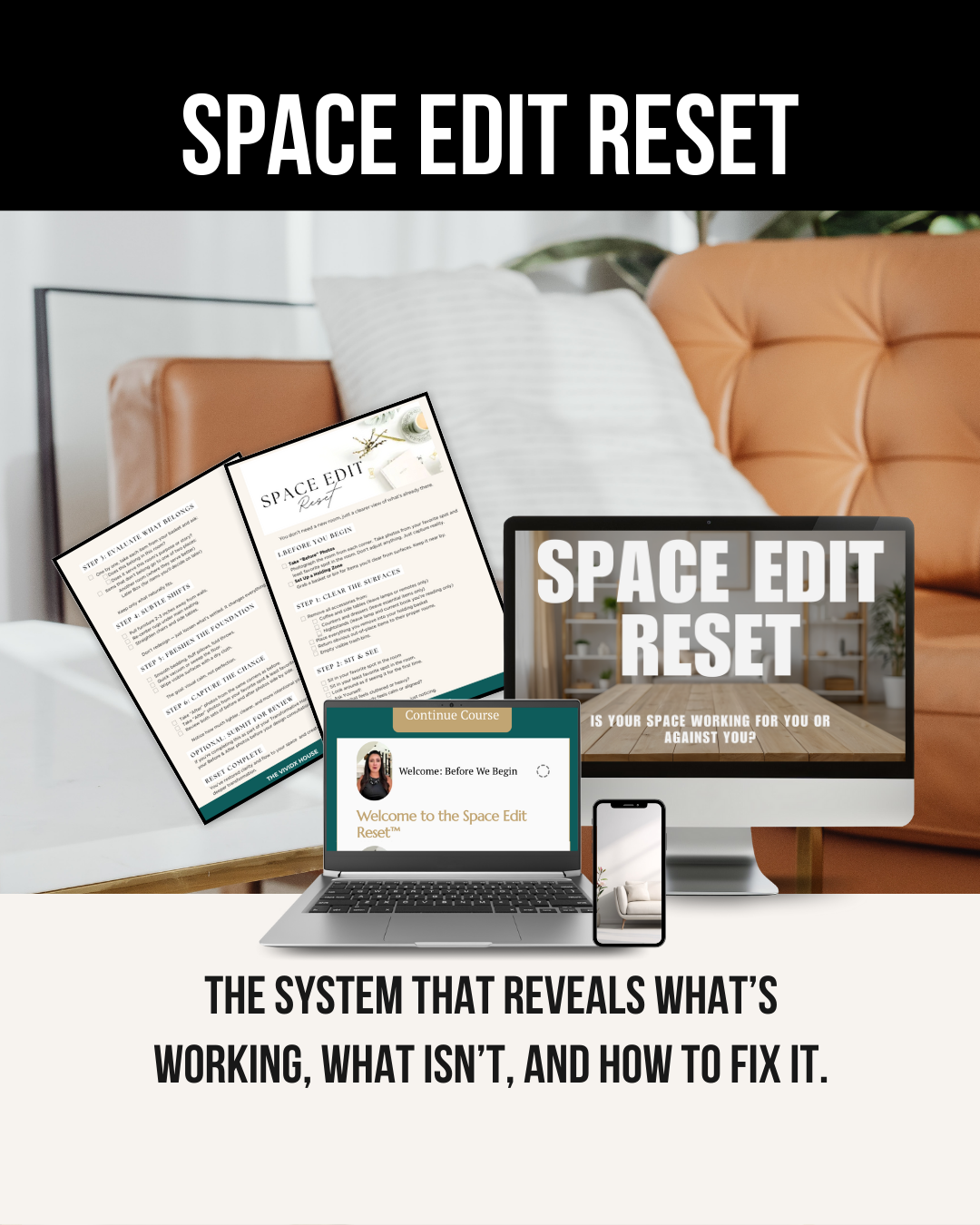
Why Does My Room Feel Stale or Lifeless?
You walk into your room and nothing feels alive. The space looks flat. The air feels still. The layout feels predictable in a way that drains the room of presence. Nothing is technically wrong, but nothing feels engaging or supportive either. The room feels lifeless, as if it has been frozen in place.
A room feels stale when the structure no longer matches the life inside it.
This has nothing to do with trends or decor fatigue.
It has everything to do with how the architecture, layout, and sightlines shape your experience of the room.
A stale room is a structural issue, not a design failure
A room feels lifeless when:
• the anchor has not been evaluated in years
• the walkway is too rigid or too wide
• the seating zone is spread too far
• the scale is no longer supporting the space
• the surfaces carry static, predictable decor
• the sightlines feel flat or empty
• the room’s purpose has changed, but the space has not
A stale room is one that stopped evolving while your life kept moving.
Here are the real reasons your room feels stale
1. The anchor has not been re-evaluated
Your sofa, bed, or main seating piece may be in the same place it has been for years.
Over time, a stagnant anchor creates stagnation in the entire room.
When the anchor does not reflect the way you live now, the room goes numb.
2. The walkway is too predictable
If your body moves through the room without any sense of support or engagement, the space feels flat.
Walkways need intention, not autopilot.
3. The seating zone is too far apart
Distance creates disconnect.
If pieces sit too far away from each other, the room loses intimacy and energy.
A room feels stale when nothing feels connected.
4. The surfaces hold static decor
If the same objects sit in the same formation for too long, the room feels unchanged even when you clean.
Stale decor creates a stale experience.
5. The walls are underbalanced
A room with one heavy wall and one empty wall feels ungrounded.
This imbalance creates a hollow, lifeless sensation.
6. The room no longer supports your current routines
A stale room is often a room built for a past version of your habits.
What once made sense now feels disconnected.
Why buying new decor will not fix a stale room
You can buy new pillows.
You can bring in plants.
You can refresh accessories.
But if the structure is unchanged, the room still feels lifeless.
Stale rooms are not decor problems.
They are structural problems.
A room feels alive when the structure supports movement and presence
Rooms feel alive when:
• the anchor is aligned
• the walkway supports natural motion
• the seating zone encourages engagement
• the visual weight is balanced
• the scale feels proportional
• the purpose matches your current life
A living room should feel lived in.
A bedroom should feel grounded.
A dining room should feel centered.
This is exactly why the Space Edit Reset™ works
The Space Edit Reset™ brings a room back to life by revealing the structure beneath the surface.
Inside the Reset, you learn how to:
• observe the room with fresh eyes
• clear the static weight from surfaces
• identify the correct anchor
• tighten or open the seating zone
• rebalance the walls
• rebuild the room so it feels awake again
Once the structure is aligned, the room feels vibrant even before you add decor.
Two simple tests to find the source of staleness
1. Sit in the seat you never use and look around
This angle reveals where the room has gone flat.
You will see which walls need balance and which pieces are no longer contributing.
2. Remove one predictable item from every major surface
Take away the object your eye expects to see.
Even small changes reveal whether the room’s staleness comes from static sightlines or structural imbalance.
A real homeowner moment
A homeowner once told me her living room felt “lifeless,” even though she kept it clean and decorated. She said it looked fine in photos but felt flat in person.
Once we applied the Reset, the real issue became clear.
Her anchor had not moved in eight years.
The seating zone was spread too wide.
The surfaces carried predictable decor that never shifted.
The room no longer matched the life she lived today.
We realigned the anchor, tightened the seating, and rebalanced the walls.
The space felt awake for the first time in years.
She didn’t just see the room. She felt it again.
Your next step
If your room feels stale or lifeless, the issue is not the decor. It is the structure. The Space Edit Reset™ teaches you how to rebuild the room so it feels present, grounded, and alive again.
Apply these principles inside The Space Edit Reset™.
Is your space working for you or against you?
JOIN THE FACEBOOK GROUP: The Space Edit Reset Group
Why Does My Home Feel Cold and Uninviting?
You walk into your home and instantly sense something missing. The space feels distant. The rooms look bare in a way that does not feel intentional. Nothing feels warm or connected. You cannot settle in. You cannot relax. You cannot feel held by your own space.
A home feels cold when the structure fails to create support.
This is not about buying cozy decor.
This is not about adding throw blankets or candles.
A cold home is the result of architectural and layout decisions that do not give the room enough grounding.
A cold home is a structural issue, not a styling issue
Your home feels cold when:
• the anchor floats without support
• the seating zone is too spread out
• the walls carry too little weight
• the walkway feels wide or empty
• the scale is too small or too sparse
• the purpose of the room is unclear
Coldness is not about temperature.
Coldness is about lack of grounding.
Here is why your home feels cold
1. The anchor is floating instead of grounding the room
If your sofa or bed sits too far from the supporting elements around it, the room feels disconnected.
A floating anchor leaves the home without a visual center.
Coldness often begins with the anchor.
2. The seating zone has too much distance
When furniture pieces sit too far apart, the room loses its sense of intimacy.
Conversation feels strained.
Movement feels exaggerated.
Wide spacing creates emotional distance in a room.
3. The walls are underdeveloped
A wall does not need to be filled, but it does need to be balanced.
Walls with too little visual weight make the entire room feel unfinished.
An underdeveloped wall sends a message of emptiness.
4. The walkway is wider than necessary
Excessively open walkways may seem practical, but they create a cold, unanchored feeling.
Rooms feel inviting when movement is guided, not when it feels like an open corridor.
5. The scale of the furniture is too small for the architecture
Small-scale pieces make the room feel sparse, even when it is technically furnished.
A room feels cold when the architecture has nothing substantial to hold onto.
6. The sightlines do not lead anywhere meaningful
When your eye hits blank or empty spaces, the room feels flat.
A home feels cold when nothing pulls the eye inward.
Why decor cannot fix a cold home
Most homeowners try to fix a cold space by:
• adding throw blankets
• bringing in plants
• layering pillows
• adding small decor pieces
But none of these fix the structural absence underneath.
Warmth does not come from stuff.
Warmth comes from grounding.
What makes a home feel warm and inviting
A home feels inviting when:
• the anchor is strong
• the seating zone is defined
• the visual weight is balanced
• the walkway feels natural
• the scale feels proportional
• the room supports how you live
Warmth is a structural experience.
This is exactly why the Space Edit Reset™ works
The Space Edit Reset™ reveals why your home feels cold and shows you how to rebuild the foundation so the space feels supportive and inviting again.
Inside the Reset, you learn how to:
• observe the room without distraction
• identify the correct anchor
• rebalance the walls
• define the seating zone
• adjust the walkway
• return pieces that create connection
Once the structure is aligned, the home feels warm even before you add decor.
Two simple tests to locate the coldness
1. Sit in the main seat and look outward
If your eye hits empty space instead of grounding elements, the coldness is coming from underdeveloped walls or a floating anchor.
2. Tighten the seating zone by a few inches
Bring the sofa, chairs, and table closer together.
If the room instantly feels more inviting, the spacing was too wide.
A real homeowner moment
A homeowner once told me her home felt cold no matter how much she decorated. She added blankets, candles, and textured pillows. Nothing helped.
Once we walked through the Reset, the issue was clear.
Her sofa floated too far from the rug.
The chairs sat too far apart.
The walls carried almost no weight.
We anchored the room correctly, tightened the seating zone, and balanced the walls.
The home felt immediately warmer without buying a single new decor item.
She finally felt like someone lives here.
Your next step
If your home feels cold and uninviting, the issue is not your decor. It is your structure. The Space Edit Reset™ teaches you how to realign your rooms so your home finally feels warm, grounded, and welcoming.
Apply these principles inside The Space Edit Reset™.
Is your space working for you or against you?
JOIN THE FACEBOOK GROUP: The Space Edit Reset Group
Why Does My Home Feel Uncomfortable?
You walk through your home and feel a subtle discomfort you cannot explain. Nothing is wrong. Nothing is messy. The decor is fine. The furniture is fine. The room looks acceptable. Yet something about the space makes you restless. You cannot sink into the sofa. You cannot relax in your bedroom. You cannot settle anywhere for long.
A home feels uncomfortable when the structure works against you.
This has nothing to do with style and everything to do with how the room is arranged beneath the surface.
Comfort comes from structure, not decor
Your home feels uncomfortable when:
• the anchor is misaligned
• the walkway creates tension
• the furniture scale does not match the room
• the surfaces carry too much weight
• the sightlines are crowded
• the purpose of the room is unclear
These issues make a home feel uneasy even when everything is clean and visually appealing.
Here are the real reasons your home feels uncomfortable
1. The anchor is not supporting the room
Your sofa, bed, or dining table sets the tone for the entire space.
If the anchor is pointed at the wrong focal point or pushed too tightly against the wall, the room feels tense.
A misaligned anchor creates emotional discomfort.
2. The walkway interrupts your natural movement
If you have to shift, angle, or squeeze as you walk through a room, the space feels uncomfortable no matter how beautiful it is.
Your body senses friction immediately.
3. The furniture scale feels imposing or insufficient
Oversized pieces make the room feel cramped.
Undersized pieces make the room feel unstable.
When the scale does not match the architecture, comfort disappears.
4. The surfaces hold more weight than the eye can process
Even clean surfaces can feel overwhelming if they carry tall objects, layers, stacks, or clusters.
This creates visual tension that your body interprets as discomfort.
5. The sightlines clash with each other
When your eyes hit multiple competing elements, you feel unsettled.
A crowded entry wall, a heavy console, or a tall piece out of proportion can disrupt the entire room.
6. The room is not serving the life you live now
A space designed for a past version of your routines will always feel uncomfortable.
Your home needs to reflect how you live today.
Why styling cannot fix an uncomfortable room
Most homeowners try to solve discomfort by:
• buying new decor
• adding throw pillows
• rearranging accessories
• swapping small pieces
These choices do not relieve structural pressure.
They only mask it temporarily.
Comfort returns only when the structure is corrected
You feel comfortable in a space when:
• the anchor is aligned
• the walkway feels effortless
• the scale matches the room
• the sightlines feel calm
• the surfaces feel balanced
• the purpose is clear
Comfort is a structural experience, not a decorative one.
This is exactly why the Space Edit Reset™ works
The Space Edit Reset™ reveals why your home feels uncomfortable and shows you how to correct the architecture beneath the room.
Inside the Reset, you learn how to:
• observe the home from multiple vantage points
• clear surfaces so the structure becomes visible
• identify the correct anchor
• open circulation paths
• balance visual weight
• rebuild the room so it supports your body instead of working against it
Comfort becomes the natural result of structural clarity.
Two simple tests to find the source of discomfort
1. Sit in the seat you avoid
This spot always exposes the real problem.
From here you will see tight walkways, uneven weight, or anchor misalignment instantly.
2. Clear your entry sightline
Remove everything visible when you first step into the room.
If the room feels calmer right away, the discomfort was visual overload, not clutter.
A real homeowner moment
A homeowner once told me her home felt uncomfortable in a way she could not describe. She cleaned constantly. She changed decor. She rearranged furniture. Nothing helped.
Once we applied the Reset, the reason was obvious.
Her anchor was aligned to the wrong wall in every room.
The walkways forced awkward angles.
The surfaces carried more visual weight than the architecture could handle.
We corrected the anchor, opened the paths, and lightened the sightlines.
Her home felt comfortable for the first time.
She didn’t realize comfort was structural.
Your next step
If your home feels uncomfortable, the issue is not the decor. It is the structure. The Space Edit Reset™ teaches you how to realign your rooms so your home finally feels grounded, calm, and supportive.
Apply these principles inside The Space Edit Reset™.
Is your space working for you or against you?
JOIN THE FACEBOOK GROUP: The Space Edit Reset Group
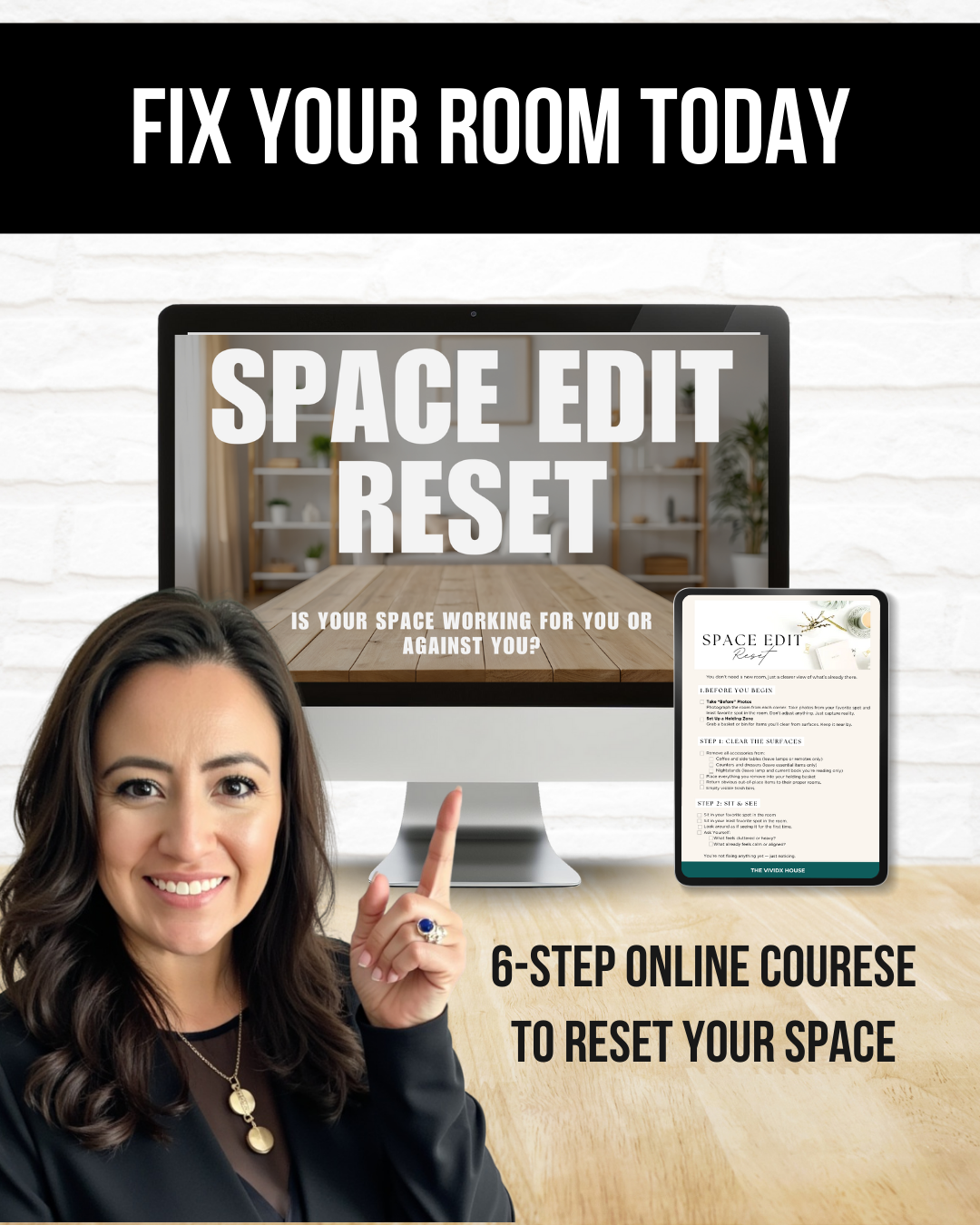
Why Does Every Room in My House Feel Off?
You walk from the living room to the kitchen, then to the bedroom, and the same feeling follows you everywhere. Each room looks fine at first glance, but something is off. The layouts feel unsettled. The energy of the house feels scattered. No single room feels grounded. You keep trying to fix one space at a time, but the discomfort returns as soon as you step into the next room.
This is not a single-room problem.
This is a whole-house structure problem.
When every room feels off, the issue is not your decor, your style, or your housekeeping.
The issue is that the house has no consistent architectural rhythm supporting how you live.
A house feels off when the structure is misaligned from room to room
Homes become uncomfortable when the structural alignment shifts constantly.
Your body senses the imbalance, even if you cannot name it.
Your house feels off when:
• anchors point in conflicting directions
• circulation breaks from room to room
• scale changes dramatically between spaces
• the sightlines fight each other
• visual weight piles up in one area while other areas feel empty
• the purpose of each room is unclear
These inconsistencies create a house that feels disjointed instead of cohesive.
Here are the real reasons every room feels off
1. The anchors are competing instead of aligning
Each room has a main anchor.
But if the sofa in the living room is pointed one way, the dining table another way, and the bed another way, the house loses its internal flow.
Competing anchors make the home feel chaotic.
2. The walkways do not support how you actually move
A walkway that works in one room but squeezes you in the next creates tension you feel throughout the entire house.
Your body remembers friction.
3. The scale shifts too dramatically between spaces
A large sectional in the living room paired with tiny nightstands in the bedroom creates an imbalance that carries through the entire home.
Your brain craves proportional consistency.
4. The walls carry weight unevenly
If one room has heavy furniture and dense sightlines while another room feels empty and underdeveloped, your house feels visually fractured.
Balance needs to exist across the whole home, not just inside each room.
5. The purpose of each room is not defined
A room that tries to serve too many functions affects the room next to it.
When every space is doing a little bit of everything, nothing feels grounded.
A house feels off when purpose is scattered.
Why fixing one room at a time never works
When the whole house feels off, working on a single room creates temporary relief but never solves the true problem.
You fix one layout.
Then another room feels worse.
You style a bedroom.
Then the hallway feels wrong.
You adjust a sightline.
Then the next room looks out of balance.
The alignment does not exist between spaces, so the discomfort moves around.
Your home is telling a story. Right now, the chapters do not match.
Every room contributes to the house’s overall rhythm.
When the rhythm breaks, the house feels disconnected.
This is not a decor issue.
This is a structural issue.
This is exactly why the Space Edit Reset™ works
The Space Edit Reset™ gives you the framework to evaluate the entire home as one system instead of a collection of separate rooms.
Inside the Reset, you learn how to:
• observe each room through the same lens
• clear the visual noise so the architecture becomes obvious
• align anchors from room to room
• test the walkway across the entire house
• balance visual weight between spaces
• rebuild the home so every room supports the next
Once the structure is consistent, the whole home feels cohesive, grounded, and stable.
Two simple tests that reveal why the whole house feels off
1. Stand at the end of your hallway and look through all visible rooms
If your eye jumps instead of glides, the alignment is broken.
The anchors are not working together.
2. Walk through the house and count the number of times you adjust your body
If you step sideways, slow down, angle around corners, or shift your path, the house has circulation tension.
Your house feels off because your body feels off inside it.
A real homeowner moment
A homeowner once told me her entire house felt “just slightly wrong,” no matter how much she cleaned or how many times she redecorated. She had fixed her living room, then her bedroom, then the dining room, but the discomfort followed her everywhere.
Once we applied the Reset, the issue became clear.
Her home had no structural consistency.
The anchors fought each other, the walkways shifted room by room, and the sightlines were overloaded in some spaces and empty in others.
We realigned the anchors, opened circulation, and balanced the walls.
Suddenly the house felt calm from the front door to the back bedroom.
She finally felt like it was one home instead of a collection of rooms.
Your next step
If every room in your house feels off, the solution is not more decor. It is alignment. The Space Edit Reset™ teaches you how to create a home where every room works together instead of against each other.
Apply these principles inside The Space Edit Reset™.
Is your space working for you or against you?
JOIN THE FACEBOOK GROUP: The Space Edit Reset Group
Why Does My House Feel Disorganized Even When Everything Has a Place?
You have baskets. You have bins. You have labeled drawers, shelf dividers, and storage systems. Everything technically has a place. Yet the house still feels scattered. Every room carries a low hum of disorganization you can feel even when nothing is out of order.
This is one of the most frustrating experiences for homeowners because it feels like you are doing everything “right.” The problem is not your storage. The problem is that organizing and designing are not the same thing.
A home can be organized and still feel disorganized when the structure is misaligned.
A space with storage is not the same as a space with structure
You can put every item in the right basket and still have a room that feels off.
This happens when your home carries structural tension beneath the organization.
A home feels disorganized when:
• the anchor is wrong
• the walkway is interrupted
• the visual weight is uneven
• the scale is mismatched
• the sightlines are crowded
• the room’s purpose is unclear
Your brain reads these architectural issues as “disorder” even if everything is tidy.
Here is why your home still feels disorganized
1. The anchor is misaligned
If the main furniture piece is facing the wrong focal point or sitting on the wrong wall, the entire room feels unsettled.
Even organized items cannot fix the imbalance.
Your home feels chaotic when the anchor is not where it belongs.
2. The walkway creates friction
Your storage may be perfect, but if you have to squeeze between furniture or curve unnaturally through a room, the space feels disordered.
Movement shapes the emotional experience of a home.
3. The surfaces are visually heavy
A console can be tidy and still feel chaotic if the items on it stack too much weight.
A nightstand can be neat but feel overwhelming if the objects are too tall or too numerous.
Organization removes items.
Structure removes tension.
4. The room has too many silent focal points
Your eyes do not know where to land.
A shelf pulls attention one way.
A wall pulls attention another way.
A piece of furniture pulls attention a third way.
This creates visual fragmentation.
5. The function of the room is not defined
When a room tries to serve too many purposes, everything feels scattered, even if nothing is messy.
A room with a clear purpose always feels more organized.
Why organizing systems do not fix structural imbalance
Bins and baskets give objects a home.
But they do not give the room clarity.
You can organize the surfaces and interior of every cabinet, but if the architecture is not supported, the home still feels chaotic.
Organization controls items.
Structure controls experience.
This is exactly why the Space Edit Reset™ works
The Space Edit Reset™ separates true organizational needs from structural misalignment. Once you see the architecture beneath the room, the feeling of disorganization finally makes sense.
Inside the Reset, you learn how to:
• observe the room without visual noise
• clear surfaces so the architecture becomes visible
• identify the correct anchor
• rebalance visual weight
• open the circulation path
• rebuild the room so organization finally feels seamless
Once the structure is right, your existing storage systems begin to work the way they were meant to.
Two simple tests that reveal the real issue
1. Remove every object from the main sightline
Stand in the doorway.
Clear the wall, console, or surface you see first.
If the room suddenly feels calmer, the disorganization was structural, not storage related.
2. Pull the anchor forward two inches
Move the sofa, bed, or dining table slightly forward.
If the room feels lighter, the anchor was creating pressure that organization could never fix.
A real homeowner moment
A homeowner once told me she had every organizing tool imaginable. She labeled drawers, added bins, and created storage in every room. But the house still felt disorganized.
Once we walked through the Reset, the issue became clear.
Her sofa was aligned to the wrong wall, creating a tight walkway and heavy sightline.
Her storage systems were fine.
The structure was not.
We corrected the anchor and opened the path.
The home instantly felt calmer and more cohesive.
She said, “Everything finally works without me doing more.”
Your next step
If your home feels disorganized even though every item has a place, the issue is not your storage. It is your structure. The Space Edit Reset™ teaches you how to align your rooms so your home finally feels put together, grounded, and complete.
Apply these principles inside The Space Edit Reset™.
Is your space working for you or against you?
JOIN THE FACEBOOK GROUP: The Space Edit Reset Group
How to Decorate When You Don’t Know Your Style
You want a beautiful home. You know what you like when you see it, but when you try to decorate your own space, everything feels random. You scroll through inspiration, but nothing seems consistent. You buy pieces you love, but they do not look right together. You try to define your style, but it feels slippery, inconsistent, or impossible to put into words.
If you have ever thought, “I don’t know my style,” you are not stuck. You are simply decorating without a structure. Style becomes clear only after the foundation is correct.
Not knowing your style is not a problem. It is a signal.
Most people blame themselves for lacking style, but the issue is never about taste.
The issue is that the room has no defined purpose, no clear anchor, no balanced sightlines, and no structural clarity.
Without structure, every style feels confusing.
With structure, your style becomes obvious.
Here is why you cannot identify your style yet
You are trying to define your style while:
• the layout is off
• the scale is mismatched
• the anchor is wrong
• the room is carrying too much weight
• the space is reflecting an older version of your life
Style cannot emerge from a disorganized foundation.
It emerges from clarity.
1. Your room is talking over your decor
A room with structural issues will overpower any decor you add.
You could have beautiful pieces, but if the room is unaligned, the style feels inconsistent.
This is why people think they “do not have a style.”
Their style never had space to appear.
2. You are mixing purchases without understanding the anchor
When you buy decor before identifying the anchor, the pieces have nothing to respond to.
They float around the room without a relationship to each other.
Your style shows up only when everything in the room reflects the same anchor.
3. You are looking at inspiration before observing your own space
Scrolling through inspiration can feel helpful, but it becomes confusing when you do not yet understand what your room needs.
You have been trying to choose a look.
You need to choose a structure first.
4. Your identity has shifted but your space has not
Many people “lose their style” when their life changes.
Your space still reflects an older version of you, so everything new feels disconnected.
You do not lack style.
You have outgrown the space.
Style becomes clear when the structure is right
Designers do not start with style.
They start with:
• layout
• proportions
• sightlines
• circulation
• anchor
• purpose
Once the structure is set, style becomes extremely easy to identify.
Homeowners always say the same thing once the reset is complete:
“I finally know what I like.”
This is exactly why the Space Edit Reset™ works
The Space Edit Reset™ reveals your style by stripping away visual noise and aligning the foundation of the room.
Inside the Reset, you learn how to:
• observe the room with fresh eyes
• clear the surfaces blocking your style
• define what the space is actually for
• identify the correct anchor
• balance visual weight
• rebuild the room so your preferences finally make sense
Once the structure is correct, your style becomes visible and consistent.
Two moves that help you discover your style today
1. Clear one entire surface and leave it empty for a full day
When a surface is empty, you can see the true architecture of the room.
This clarity reveals the direction your style naturally leans toward.
2. Sit in three spots and write one word for each
The words you choose reveal your style more accurately than any mood board.
Most people discover they want:
• softer lines
• stronger contrast
• more texture
• fewer items
• larger scale pieces
• lighter walls
Your body knows what it wants before your mind does.
A real homeowner moment
A homeowner once told me she had “no style at all.” She kept buying items she liked, but everything felt mismatched once she put them together.
Once we worked through the Reset, her style became obvious within minutes.
Her anchor had been wrong for years.
Her sofa was centered to the TV instead of the architecture.
Every item she bought felt wrong because the structure was wrong.
We aligned the anchor and cleared her sightline.
Suddenly all her previous purchases looked cohesive.
She said, “I do have a style. My room was blocking it.”
Your next step
If you feel like you do not know your style, the issue is not your taste. It is the structure. The Space Edit Reset™ teaches you how to build a foundation where your style finally becomes clear, consistent, and grounded.
Apply these principles inside The Space Edit Reset™.
Is your space working for you or against you?
JOIN THE FACEBOOK GROUP: The Space Edit Reset Group
Why Does My Decor Look Wrong in My Home?
You bring home something you loved in the store. A vase, a lamp, a piece of art, a throw, a sculptural object. It looked perfect online. It looked chic in the showroom. But the moment you place it in your home, something is off. The style is right, the color is right, but it still feels wrong in the room.
This is one of the most confusing experiences for homeowners. You know you chose a beautiful piece, yet it does not translate into your space the way you imagined. You start to doubt your eye for design, but the problem is not your taste at all.
Decor looks wrong when the structure underneath it is wrong.
Decor is the final layer, not the foundation
Decor cannot fix a room with:
• mismatched scale
• misplaced anchor
• visual overload
• awkward circulation
• unclear purpose
When these elements are off, even the most beautiful decor feels like it does not belong.
The real reasons your decor feels wrong
Once you know what is actually happening, the frustration finally makes sense.
1. The decor is fighting the scale of the room
A lamp can look perfect online but feel oversized in your room because your ceilings are lower or your furniture is smaller.
A piece of art can feel too tiny on your wall because the wall carries more visual weight than the photo suggested.
Decor feels wrong when the scale around it is wrong.
2. Your surfaces are already carrying too much weight
If your surfaces feel heavy, any decor you add will feel like too much.
A single additional object can tip a room from balanced to crowded.
Your decor is not wrong. The surface load is.
3. The anchor of the room is misplaced
If the anchor (sofa, bed, dining table) is pointed at the wrong focal point, everything else in the room feels slightly off.
When the foundation is misaligned, decor cannot settle.
It is like trying to place jewelry on a garment that is twisted or uneven.
4. The decor style does not match the true purpose of the room
Sometimes decor looks wrong because the room itself has not been defined.
If the room is trying to serve too many functions, the decor has no clear visual message.
Rooms feel cohesive when purpose is clear.
5. The sightlines are cluttered
Decor often looks wrong because it interrupts the main sightline of the room.
If your eye runs into objects instead of traveling smoothly across the space, the decor feels like an obstacle.
A room can be tidy but still visually loud.
Why buying more decor never solves the problem
When decor looks wrong, homeowners often try to fix it by:
• buying more
• swapping styles
• changing color palettes
• adding fillers
• rearranging endlessly
But decor cannot fix structure.
If the architecture, placement, and flow are not aligned, every new piece feels like another mismatch.
This is exactly why the Space Edit Reset™ works
The Space Edit Reset™ teaches you how to see the room before you style it.
It helps you understand:
• what the room actually needs
• how to lighten visual weight
• where the true anchor belongs
• how to balance sightlines
• how to build a structure that supports decor instead of fighting it
When the foundation is correct, decor finally looks the way you imagined.
Two simple tests to understand why your decor looks wrong
1. Clear the entire surface and reintroduce pieces one at a time
Once the surface is empty, it is easier to see whether the decor is truly the issue or if the surface itself is too heavy.
Most homeowners realize the decor was not the problem.
The surface was.
2. Stand at the doorway and study the first thing your eye hits
If the decor interrupts the main sightline, the piece will always look wrong no matter how beautiful it is.
A real homeowner moment
A homeowner once brought home a beautiful sculptural vase. It matched her style perfectly, but every time she placed it on her console, it looked awkward.
Once we walked through the Reset, the issue became obvious.
The console was on the wrong wall, pulling too much weight into one side of the room.
The vase was not the problem.
The placement was.
We shifted the console to the correct wall.
The vase suddenly looked perfect.
She said, “I thought I needed new decor. I needed a new structure.”
Your next step
If your decor keeps looking wrong in your home, the issue is not the item. It is the foundation beneath it. The Space Edit Reset™ teaches you how to build a room where decor finally looks intentional, cohesive, and grounded.
Apply these principles inside The Space Edit Reset™.
Is your space working for you or against you?
JOIN THE FACEBOOK GROUP: The Space Edit Reset Group
How to Make a Small Room Feel Bigger Without Getting Rid of Everything
You walk into a small room and instantly feel the limits. The walls feel closer. The walkway feels tight. The furniture feels heavier. You want the room to feel bigger, but you do not want to live like a minimalist or throw out half of what you own. You want the room to work without stripping it down.
A small room does not need less stuff.
A small room needs better structure.
When the structure is aligned, even the smallest rooms can feel open, calm, and surprisingly spacious.
Most small rooms feel cramped because the layout blocks the natural flow
Homeowners blame clutter or the size of the space, but size is rarely the real issue.
Small rooms feel cramped when:
• the anchor is misplaced
• the walkway is tight
• the furniture is scaled wrong
• the visual weight is heavy
• the layout works against movement
Fix these and the room expands without removing everything.
1. Pull furniture away from the walls
This is the opposite of what most people do, but it is the first move designers make.
When everything is pushed to the perimeter, the walls feel closer and the room feels boxed in.
Pull the sofa forward two inches.
Move the chair slightly inward.
Create a defined seating zone instead of a wide empty center.
The room opens instantly.
2. Fix the walkway first
Small rooms often feel cramped because the walkway is fighting the layout.
Even a narrow path needs a clean, uninterrupted flow.
Ask yourself:
“Where does my body naturally want to walk?”
Arrange the room to support that line.
When the walkway works, the room feels twice as large.
3. Adjust the scale, not the quantity
Small rooms can hold multiple pieces as long as the scale is correct.
Examples:
• smaller nightstands instead of giant ones
• a wide rug that anchors the room instead of chopping it
• a coffee table that is proportional instead of oversized
When scale is right, the room feels spacious even with the same amount of furniture.
4. Balance the visual weight
Small rooms often feel heavy because one wall carries too much.
A large shelf on one side and a bare wall on the other creates imbalance.
To lighten the space:
• keep heavy items on the stable wall
• keep lighter items on the opposing wall
• avoid stacking too many objects in corners
Balance makes a small room feel open.
5. Define the purpose of the room
Small rooms often feel cramped because they try to do too much.
A room intended for resting ends up holding storage, work, hobbies, and overflow.
Choose one primary purpose.
Support it with the layout.
Let every other function be secondary.
When the purpose is clear, the room feels larger.
What not to do
Most people try to fix a small room by removing decor or buying more storage bins.
But if the structure is off, minimalism will not fix the tightness, and more storage will make the room heavier.
You do not need fewer things.
You need a smarter structure.
This is exactly what the Space Edit Reset™ solves
The Space Edit Reset™ teaches you how to evaluate a small room without defaulting to decluttering.
It shows you how to:
• observe the space from multiple angles
• clear surfaces so the structure is visible
• identify the true anchor
• reset the layout to maximize movement
• lighten the visual load without getting rid of meaningful pieces
Small rooms feel bigger when the structure supports your body, not when you remove everything.
Two simple moves to make any small room feel bigger today
1. Pull the anchor piece forward slightly
Move the sofa, bed, or main chair forward by two inches.
This single action breaks the boxed-in feeling and expands the space visually.
2. Clear one full wall for 24 hours
Take everything off one wall.
This reveals the true proportions of the room.
You will see where the imbalance lives and what needs to shift.
A real homeowner moment
A homeowner once told me her tiny guest room felt claustrophobic. She assumed she needed to clear everything out. But once we walked through the Reset sequence, the real issue became obvious.
The bed was pressed to the wall, and the walkway to the door was squeezed tightly against a dresser.
We pulled the bed forward slightly, shifted the dresser to the stable wall, and removed one item from the sightline.
Nothing was decluttered.
Nothing was removed.
The room felt twice as big.
She said, “I cannot believe we didn’t get rid of anything.”
Your next step
You do not need to empty a small room to make it feel spacious. You need the right structure. The Space Edit Reset™ teaches you how to transform the way a room performs so it finally feels open, functional, and grounded.
Apply these principles inside The Space Edit Reset™.
Is your space working for you or against you?
JOIN THE FACEBOOK GROUP: The Space Edit Reset Group
The Mistake Everyone Makes With Furniture Placement
If you have ever rearranged your living room over and over and still felt like something was wrong, you are not alone. Almost every homeowner makes the same mistake with furniture placement. They think placement is about filling space instead of guiding the room.
When furniture fights the natural structure of the space, the entire room feels unsettled. Even if the decor is beautiful. Even if the pieces are expensive. Even if the room looks good in a photo. The placement still feels off because the foundation was never aligned.
The biggest mistake: placing furniture against the walls
This is the most common layout mistake in homes.
People push everything to the edges of the room because they want to create “more space,” but this layout creates the opposite effect.
When furniture hugs the walls:
• the room feels flat
• the center feels empty
• the circulation becomes awkward
• the anchor loses its power
• the seating zone drifts apart
Rooms feel disconnected when the furniture is glued to the perimeter.
Why this mistake ruins almost every layout
The center of the room is where conversation, movement, and grounding happen.
When the furniture sits at the edges, the middle of the room becomes dead space.
Your eye does not know where to land.
Your body does not know where to settle.
The room feels wide but shallow, open but uncomfortable.
This is why homeowners keep shifting decor and swapping pillows.
They are trying to solve a structural problem with styling.
What furniture is actually supposed to do
Furniture placement is not about making space look bigger.
It is about making space work.
The placement should:
• lead the eye
• direct conversation
• establish the anchor
• balance visual weight
• create a clear walkway
• center the purpose of the room
When placement supports these, the room feels calm and grounded.
Other common placement mistakes homeowners make
1. Centering the sofa to the wrong thing
Most people center their sofa to the TV, not the architecture.
If the true focal point is a window, fireplace, or the actual center of the room, the layout will always feel off.
2. Allowing the walkway to squeeze behind deep seating
Even slight walkway tension makes the entire room feel uncomfortable.
If you have to angle your body around a corner, the placement is wrong.
3. Using a rug that is too small
A rug shaped for retail photos often shrinks a real room.
When the rug is too small, furniture floats awkwardly and the seating zone never feels grounded.
4. Placing chairs as fillers instead of functional pieces
Chairs positioned only to “fill space” create dead zones.
Every seat needs a purpose and a relationship to the anchor.
Why placement mistakes cannot be fixed with decor
Most homeowners try to fix placement with:
• more pillows
• an extra throw
• another plant
• a new shelf
• different art
These choices add visual noise without solving the issue.
The structure is wrong, so the room keeps fighting you.
This is exactly why the Space Edit Reset™ works
The Space Edit Reset™ teaches you how to see placement the way designers do.
It reveals the structure beneath the room so you can place furniture where it actually belongs, not where habit tells you to put it.
Inside the Reset, you learn how to:
• identify the true anchor
• understand sightlines
• define the seating zone
• create natural circulation
• balance visual weight
• rebuild the layout so it supports your life
Once the structure is correct, placement becomes simple and intuitive.
Two simple tests to correct placement instantly
1. Pull the anchor piece forward by two inches
Move the sofa or bed slightly forward.
This small shift breaks the “everything against the walls” pattern and immediately reveals the true layout.
Most homeowners feel relief instantly.
2. Sit in the least used seat and assess the room
From this vantage point, you will see the real imbalance.
A tight walkway.
A heavy wall.
An awkward anchor.
Placement issues become obvious from the angle you normally avoid.
A real homeowner moment
A homeowner once told me she had rearranged her living room at least ten times. Nothing ever felt right. She kept buying decor, thinking she was missing something.
Once we went through the Reset, the issue revealed itself immediately.
Every piece of furniture was pushed against the walls.
The center of the room was empty.
The seating zone was scattered.
We pulled the sofa forward.
We created a real center.
The room transformed in minutes.
She said, “I cannot believe I lived like this for years.”
Your next step
If your furniture placement never feels right, the problem is not your furniture. It is the missing step. The Space Edit Reset™ shows you the exact method for correcting structure so your rooms finally work.
Apply these principles inside The Space Edit Reset™.
Is your space working for you or against you?
JOIN THE FACEBOOK GROUP: The Space Edit Reset Group
Do I Have the Couch in the Wrong Spot?
If you have ever looked around your living room and wondered, “Is the couch in the wrong place?” you are not alone. This is one of the most common layout problems homeowners struggle with. The sofa is the largest piece in the room, so even a small misplacement affects everything else. When it is not positioned correctly, the entire room feels unsettled, even if it looks fine.
And here is the surprising part.
A couch can be only a few inches off and still make the room feel wrong.
Your couch determines the entire structure of the room
Most people think the sofa is just another piece of furniture. It is not.
The sofa is the anchor.
It decides:
• where your eyes land
• how your body moves
• how the room carries weight
• how other pieces orient themselves
If the anchor is off, everything else falls out of alignment.
Here are the signs your couch is in the wrong spot
You can diagnose this quickly once you know what to look for.
1. The walkway feels tight or crooked
If you have to angle your body, squeeze through a gap, or shift sideways around the sofa, the placement is wrong.
Rooms feel uncomfortable when circulation is interrupted.
2. The sofa is forced against a wall
This is the most common mistake.
People push the sofa all the way back because it feels practical, but this usually creates a flat, heavy perimeter and an empty center.
A sofa pressed against a wall often pulls the entire room off balance.
3. The couch faces the wrong focal point
Your sofa may be aimed at the TV, but the architecture may be telling you the focal point is somewhere else.
If the orientation is off, the room feels directionless.
This is why homeowners rearrange endlessly without fixing the discomfort.
4. You avoid sitting in your own living room
This is a clear sign the layout is not supporting you.
When the anchor is wrong, the room does not feel inviting.
You gravitate away from the space without realizing why.
5. The room looks good in photos but feels wrong in person
This happens when the sofa aligns with the camera but not with the structure of the room.
The photo hides what your body feels the moment you walk in.
Why couch placement is hard for most homeowners
Because homeowners usually skip the diagnostic phase.
They move the sofa based on habit, wall space, or where the TV already sits.
They do not observe the room first.
They do not identify the true anchor.
They do not evaluate the circulation path.
When you skip these steps, it is almost impossible to get the placement right.
This is exactly why the Space Edit Reset™ solves the issue instantly
The Space Edit Reset™ shows you how to see the room the way a designer sees it.
Not through decor.
Through structure.
Inside the Reset, you learn how to:
• observe your room from multiple angles
• clear the visual noise so the layout becomes obvious
• identify the correct anchor
• create clear circulation
• rebuild the room so it feels grounded
Once you apply the system, the correct placement of the sofa becomes clear within minutes.
Two simple tests to find out if the couch is in the wrong spot
1. Pull the couch forward two inches
Just two inches.
Do not rearrange the whole room.
That small shift reveals whether the sofa has been pinned too tight to the wall.
Most homeowners feel instant relief.
2. Sit in the seat you never use
Choose the chair or corner you ignore.
From that angle, look at the sofa.
If it feels angled wrong, too flat, too heavy, or out of balance, the placement is off.
A real homeowner moment
A client once asked me this exact question. She said, “I think the couch might be in the wrong spot, but I cannot figure out where it should go.”
Her sofa had been centered to the TV for years, but the architecture of the room told a different story. The real focal point was the window opposite the entry. The moment we adjusted the alignment, the entire room settled.
She said, “I cannot believe the answer was this simple.”
Your next step
If you are wondering whether your couch is in the wrong spot, that instinct is usually right. The layout needs a reset, not more decor. The Space Edit Reset™ teaches you the exact method for diagnosing placement so your living room finally feels grounded and complete.
Apply these principles inside The Space Edit Reset™.
Is your space working for you or against you?
JOIN THE FACEBOOK GROUP: The Space Edit Reset Group
When Nothing In Your Room Works
You have tried every idea you can think of. You moved the sofa. You changed the rug. You bought new pillows. You swapped art. You rearranged the shelves. You cleaned the room. You decluttered. You even tried copying layouts from Pinterest or Instagram.
And still, nothing works.
The room refuses to settle. Everything you try looks fine for a moment, then starts to feel wrong again. It is the most discouraging experience a homeowner can have because you feel like you are putting in effort with no payoff.
But there is a reason for it. A room only refuses to work when the wrong problem is being solved.
When nothing works, the issue is never decor
Most people assume they chose the wrong rug or the wrong coffee table. They think they bought the wrong size pillows or picked the wrong wall art. They chase surface fixes because they do not realize the deeper issue is structural.
When nothing works, it means:
• the anchor is wrong
• the scale is mismatched
• the circulation is blocked
• the room has no clear purpose
• the layout was built on habit instead of intention
When the foundation is off, every attempt feels like a temporary patch.
1. The real anchor of the room has never been identified
A room cannot work without a clear anchor.
If the sofa is pointed at the wrong focal point, the layout collapses no matter how much you decorate.
A room that fights you always has an anchor problem.
2. Your walkway is creating tension
Rooms often feel wrong because the pathway through them is too tight or angled unnaturally.
Even a one inch shift can cause discomfort.
If your body cannot move naturally through the space, the room never feels right.
3. The pieces do not match the proportions
You may have beautiful furniture, but if the size is not right for the room, nothing will ever feel grounded.
Common issues include:
• rug too small
• coffee table too narrow
• sofa too long
• nightstands too tall
• art hung too high
Clean surfaces cannot override scale problems.
4. The room is holding an identity you have outgrown
A space designed for an older version of your life never feels right because it no longer matches your current needs.
A room built for entertaining feels wrong when you rarely host.
A room built around old habits feels wrong when your life has shifted.
Your space is not wrong. It is outdated.
5. You have been redecorating instead of evaluating
This is the heart of the issue.
Most homeowners try to fix their rooms with decor.
They never stop to observe what the room is actually doing.
You cannot fix a space you have not diagnosed.
This is exactly why the Space Edit Reset™ works
The Space Edit Reset™ breaks the cycle of “nothing works” by teaching you how to see the room with clarity instead of guesswork.
The method guides you through the real sequence designers use:
• observe the room from multiple angles
• clear surfaces so the structure is visible
• identify the anchor
• evaluate what belongs and what does not
• rebuild the room with purpose
Once the structure is aligned, everything begins to work.
The room stops resisting you because you are finally solving the right problem.
Two steps that reveal why nothing has worked so far
1. Stand at the doorway and clear the entire sightline
Remove everything from the first wall or surface you see.
A bench. A console. A plant. A mirror.
Look again.
You will see the true imbalance instantly.
2. Pull the largest piece forward by two inches
Move the sofa, bed, or dining table slightly forward.
This small shift exposes whether the room has been pinned too tightly to the walls.
Most homeowners feel relief instantly.
A real homeowner moment
A homeowner once told me, “Nothing works in this room. I have tried everything.”
The room was beautiful, but it felt wrong the moment you stepped into it.
Once we went through the Reset, the issue became clear within minutes.
Her sofa was aligned to a wall that was not the true center of the room.
Every attempt she made for years fought that single misalignment.
We shifted the anchor.
Everything finally fell into place.
She said, “I wasted years decorating the wrong problem.”
Your next step
When nothing works, it means the room needs a reset, not another round of decor. The Space Edit Reset™ shows you the exact method designers use to diagnose the real issue so you can create a room that finally works.
Apply these principles inside The Space Edit Reset™.
Is your space working for you or against you?
JOIN THE FACEBOOK GROUP: The Space Edit Reset Group
How to Arrange a Room
Most people think arranging a room means placing furniture wherever it fits, adding decor until the surfaces look full, and hoping the layout eventually feels right. But if you have tried to arrange a room and something still feels off, you already know this approach does not work.
Arranging a room is not about placing pieces in open spots. It is about creating a structure that supports how you live. When the arrangement is wrong, the entire room feels tense. When the arrangement is right, the room feels grounded the moment you walk in.
Room arrangement is not about style. It is about function.
A room can be beautiful and still feel uncomfortable if the structure is off.
The reason most homeowners struggle to arrange their rooms is simple. They were never taught the sequence designers use.
Designers do not start with decor.
They start with:
• anchor
• circulation
• scale
• purpose
• balance
If these pieces are not in place, the final layout never feels right.
Here is the real sequence for arranging any room
These are the steps professionals use behind the scenes.
They are simple, but most people skip them without realizing it.
1. Identify the anchor
Every room needs one clear anchor.
In a living room, it is the sofa.
In a bedroom, it is the bed.
In a dining room, it is the table.
If the anchor is wrong, the entire arrangement feels wrong.
2. Establish the true focal point
The focal point may not be the one you expect.
Examples:
• a window with a strong view
• a fireplace
• the natural architectural center of the room
If you arrange the room around the wrong focal point, no amount of rearranging will make the layout feel right.
3. Map the circulation path
Before you place anything, decide where your body needs to walk.
This is the most neglected step.
Your walkway should feel natural and spacious, not squeezed or forced.
A layout is uncomfortable when circulation is an afterthought.
4. Choose the correct scale
Scale makes or breaks a room.
Even a well arranged space feels wrong if the pieces are not proportional.
A rug that is too small shrinks the room.
A sofa that is too long crowds the wall.
A coffee table that is too narrow creates tension.
If scale is off, the arrangement never settles.
5. Balance the visual weight
Every room needs balance.
If one wall is heavy and the opposite wall is empty, the arrangement feels lopsided.
Balance has nothing to do with symmetry.
It has everything to do with how the room carries weight.
Why most homeowners struggle with arrangement
Most people skip the first four steps and jump straight to decorating or moving furniture around until something looks better. But arrangement is not trial and error. It is a sequence.
When you do not follow the sequence, you rearrange the same pieces over and over without ever solving the real issue.
This is exactly what the Space Edit Reset™ teaches
The Space Edit Reset™ does not start with decor.
It starts with structure.
It teaches you how to read your room the way designers do, so arrangement stops being guesswork.
Inside the Reset, you learn how to:
• observe the room with fresh angles
• clear surfaces to expose the structure
• define the room’s purpose
• identify the true anchor
• place each item with intention
• rebuild the layout so it finally feels right
Once you learn the method, arranging a room becomes clear and repeatable.
Two moves that instantly improve any arrangement
1. Pull the anchor piece forward by two inches
Do not rearrange.
Just pull the sofa, bed, or table slightly forward.
This releases pressure from the walls and reveals the real shape of the room.
2. Remove everything from one wall and re enter the space
A blank wall exposes balance issues immediately.
You will see whether the layout feels grounded or crooked.
A real homeowner moment
A homeowner once told me she had arranged her living room five times and nothing felt right. Once we applied the real sequence, the issue became obvious.
Her sofa was aligned to the TV, but the architectural focal point was a large window on another wall. Every arrangement she tried felt wrong because she was anchoring the room to the wrong element.
We rotated the layout toward the true focal point.
She sat on the sofa and said, “This is the first time this room has ever made sense.”
Your next step
If arranging a room feels confusing or frustrating, the problem is not your eye for design. The problem is the missing sequence. A room that works is built on structure, not surface choices.
That is exactly what The Space Edit Reset™ teaches you.
Apply these principles inside The Space Edit Reset™.
Is your space working for you or against you?
JOIN THE FACEBOOK GROUP: The Space Edit Reset Group
What to Do When a Room Just Feels Wrong
You walk into a room and feel it immediately. Something is wrong. You cannot point to one specific item. Nothing looks messy. Nothing looks broken. The room simply feels wrong in a way you cannot ignore anymore.
This is the point where homeowners start to feel frustrated, confused, or even defeated. They have tried decorating, rearranging, and buying a few new pieces, yet the discomfort stays. The room looks fine to everyone else, but it does not feel right to you.
There is a reason for that. Rooms send signals long before you consciously register what is out of place. When a space feels wrong, it is reacting to something structural, not decorative.
First, you are not imagining it
Homes often send clearer messages through feeling than through visuals.
Your body picks up tension that your mind does not yet understand.
When a room feels wrong, that is a sign that one or more foundational elements are out of sync.
The discomfort is real. You just have not learned the language of the room yet.
The most common reasons a room feels wrong
When clients tell me a room feels wrong, it almost always comes down to one of these patterns:
1. The anchor of the room is misplaced
Every room needs one defining anchor that sets the tone.
If the anchor is off center or oriented toward the wrong focal point, the space feels unsettled even when everything else looks good.
2. The furniture pushes everything to the walls
This is the most common mistake homeowners make.
It creates a hollow center and a wide perimeter that feels disconnected.
Your body senses the imbalance instantly.
3. The walkways are too tight or too wide
Circulation shapes comfort more than decor ever will.
A narrow gap around a coffee table, or a walkway that is too wide and leaves the furniture floating, disrupts the entire room.
4. Too many objects compete for attention
A room can be tidy yet still feel visually crowded.
When every wall, shelf, or surface carries multiple items, your eyes never rest.
The room feels loud, not supportive.
5. The room no longer matches your life
This is the silent culprit.
Your life evolved, but the space did not.
Rooms built for old routines always feel wrong because they are out of alignment with how you live now.
Here is what not to do
Most homeowners add more decor or shift items around without understanding the underlying issue.
This leads to:
• impulsive buying
• constant rearranging
• rooms that look different but never feel better
When a room feels wrong, decorating is not the solution. Diagnosis is.
This is exactly what the Space Edit Reset™ solves
The Space Edit Reset™ teaches you how to identify the source of discomfort instead of guessing.
It shows you how to:
• observe the room with fresh angles
• clear surfaces so the structure becomes visible
• understand the true purpose of the space
• evaluate what belongs and what does not
• rebuild the room in a way that supports your life
Once you apply the system, the feeling becomes clear.
You finally see what your body sensed all along.
Two steps you can take right now
These simple moves reveal exactly where the problem is hiding.
1. Clear one sightline completely
Stand at the doorway and remove everything from the area you see first.
A console. A bench. A plant. A stack of decor.
Then re enter the room.
You will immediately feel where the imbalance lives.
2. Pull the anchor piece forward two inches
Choose the sofa, bed, or table.
Pull it forward slightly.
This tiny shift exposes whether the room feels boxed in or pressed against the walls.
A real homeowner moment
A homeowner once told me her living room felt wrong in a way she could not explain. The furniture was new. The decor was cohesive. Everything looked fine.
Once we began the Reset process, the issue became obvious.
Her sofa faced the TV, but the true focal point of the room was a large window.
The room had been aligned to the wrong anchor for years.
We turned the layout toward the actual focal point.
The shift took less than five minutes.
The feeling changed instantly.
She said, “I cannot believe I lived with that feeling for so long.”
Your next step
When a room feels wrong, that discomfort is telling you the structure needs a reset. The Space Edit Reset™ teaches you the exact method for diagnosing what your home is really doing so the space finally feels right.
Apply these principles inside The Space Edit Reset™.
Is your space working for you or against you?
JOIN THE FACEBOOK GROUP: The Space Edit Reset Group
How to Tell What’s “Off” in a Room When You Can’t Explain It
You walk into a room and feel a slight discomfort. Nothing obvious jumps out. Nothing is messy. Nothing is wrong. But something is off, and you can feel it even if you cannot describe it.
This is one of the most common experiences homeowners have. A room looks fine but creates a subtle tension you cannot put into words. That tension is real. Your body is responding to parts of the space you have not learned to identify yet.
Once you understand what to look for, the feeling becomes clear. The discomfort is not random. It is structural.
Your body notices issues long before your eyes do
People assume they judge rooms visually first. They do not.
Your body picks up on friction before your mind processes the layout, the scale, or the visual weight.
When a space feels off, it usually means one of five elements is not aligned:
• sightline
• proportion
• scale
• circulation path
• surface weight
These elements shape the entire experience of a room. When even one of them is slightly wrong, your body registers the imbalance immediately.
1. Your sightline is broken
Stand at the doorway. Look straight ahead.
What is the first thing your eyes land on?
If the room feels off, it is often because the main sightline is blocked or crowded.
A piece of furniture sits too close.
A wall has too much packed into it.
A surface holds more weight than it should.
Your eye has nowhere to rest.
This creates an instant sense of tension.
2. The scale is slightly mismatched
Scale issues are subtle but powerful.
A coffee table that is too small.
A rug that is too short.
A mirror that hangs too high.
A sofa that is wider than the wall supporting it.
Nothing here is “wrong,” but together they throw off the balance of the entire room.
3. The circulation path has hidden friction
You may not consciously notice the walkway through a room, but your body does.
If you have to angle your body slightly to get around a chair, your brain flags the space as uncomfortable.
Even a one inch adjustment can change how the room feels.
When circulation is tight, your body never fully relaxes.
4. The room has too many competing elements
A room can be very tidy and still feel visually overwhelming.
Shelves carry too many items.
Corners hold extra decor.
Surfaces are technically clean but carry heavy objects.
Your eyes bounce around the room searching for a focal point.
That movement creates discomfort.
5. The function of the room is unclear
A room needs a purpose.
If you are not sure what the room is supposed to do, the room will never feel right.
A space without a defined function always feels scattered, even when decorated well.
This is exactly what the Space Edit Reset™ teaches you to see
The Space Edit Reset™ is designed for this exact problem.
When a room feels off but you cannot explain why, the Reset gives you the diagnostic tools to see what your body already senses.
The method shows you how to:
• observe the room with fresh angles
• clear surfaces so the structure is visible
• define what the room is actually for
• identify what belongs and what disrupts
• reset the space in a way that restores balance
Once you learn how to see a room this way, the feeling of “something is off” becomes clear and explainable.
Try these two moves to reveal what is wrong
1. Sit in three new spots and take a photo from each
You will see different issues from each angle.
A corner may suddenly feel crowded.
A wall may feel empty.
A piece you thought worked may now feel too large.
2. Clear one entire wall of decor for a day
Take everything off a single wall.
Art. Shelves. Accessories.
Live with the blank wall for 24 hours.
You will immediately see whether the wall was carrying too much weight.
A real homeowner moment
A homeowner once told me she felt “unsettled” in her family room but could not explain why. The room was tidy. The furniture was nice. It looked fine.
Once we sat in an unused chair, the problem became obvious.
The sofa cut into the main walkway by an inch.
Her body felt that friction every time she walked through the room.
She had lived with it for years without noticing it visually.
We moved the sofa forward two inches.
The discomfort disappeared immediately.
Your next step
If you feel something is off but cannot identify it, the solution is not more decor. It is a reset. The Space Edit Reset™ shows you exactly how to diagnose what your home is doing so the room finally feels grounded.
Apply these principles inside The Space Edit Reset™.
Is your space working for you or against you?
JOIN THE FACEBOOK GROUP: The Space Edit Reset
Why Does My Space Feel Uncomfortable Even When It’s Clean?
Your home is clean. The counters are wiped. The floors are clear. The laundry is put away. There is nothing out of place. Yet the room still feels uncomfortable the moment you step into it.
This is one of the most frustrating experiences for homeowners. You put in the effort. You did everything you were “supposed to do.” But the feeling you wanted never arrived. The room is tidy but not comfortable.
Clean does not equal grounded
Most people assume a clean house should automatically feel good. But a clean room can still create tension if the underlying structure is not supporting how you live.
Clean removes dirt.
Resetting removes friction.
When the structure, scale, and function of a room are off, cleaning only makes the problem more visible.
1. The layout is still creating stress
A clean room cannot override poor placement.
If your walkway is tight, your sofa is angled wrong, or your furniture interrupts natural movement, your body picks up on that right away.
Clean surfaces highlight circulation problems instead of hiding them.
2. The visual load is still too heavy
A tidy room can still feel visually loud.
Large furniture, oversized art, crowded shelves, or mismatched scale make the space feel tight even when everything is organized.
Your eyes land on too many competing elements, and your body reacts with tension.
3. The room has no true focal point
A room without a clear anchor always feels unsettled.
Your sofa may be pointed toward the TV, but the TV may not be the true anchor.
Your bed may be centered on a wall, but not centered in the room.
Without an anchor, the space feels directionless even when spotless.
4. The surfaces are clean but still carrying the wrong items
A clear coffee table can still feel wrong if the items around it do not belong.
A tidy nightstand can feel heavy if the lamp is too tall or the scale is off.
A clean countertop can feel chaotic if it is not aligned to the true function of the space.
Clean is not the same as aligned.
5. The room reflects habits, not purpose
Clean rooms often expose the deeper problem: the space has been set up by habit instead of intention.
You put the sofa there because it has always been there.
You placed the chair in that corner because it filled the empty spot.
You arranged the shelves based on old patterns.
The room is clean, but it is not aligned with how you live today.
This is exactly why the Space Edit Reset™ works
The Space Edit Reset™ reveals what is wrong beneath the surface.
It shows you why a tidy room still feels uncomfortable by teaching you how to see structure, scale, and function before you decorate.
The method guides you through:
• observing from multiple angles
• clearing surfaces to expose the real issues
• understanding what the room is actually supposed to do
• removing what does not belong
• rebuilding the space with purpose
This is the step most people miss, which is why cleaning never solves the discomfort.
Two moves you can try right now
1. Sit in the least comfortable seat for two minutes
Sit somewhere you never naturally choose.
This angle reveals hidden friction immediately.
Most homeowners see the real problem from this viewpoint.
2. Pull the largest piece of furniture forward by two inches
Do not rearrange.
Just pull it forward slightly.
This small shift shows you whether the room feels boxed in or too tight.
A real client moment
A client once told me her dining room felt uncomfortable even though it was spotless.
The table was clean. The chairs were arranged. Nothing was wrong.
But when we walked the space, the issue became clear.
The table was centered to the wall, not to the room.
The walkway behind the chairs was too tight by a narrow margin.
We shifted the table only a few inches.
Her exact words were, “I had no idea this was the problem.”
Clean was never the answer. Alignment was.
Your next step
If your home is clean but still uncomfortable, the problem is not your effort.
Your space is asking for a reset, not another round of cleaning.
The Space Edit Reset™ teaches you the system that finally makes a room feel grounded and supportive.
Apply these principles inside The Space Edit Reset™.
Is your space working for you or against you?
Nothing Is Technically Wrong With My Space But Something Is Off
You stand in your living room or bedroom and think, “There is nothing wrong here, so why does this still feel off?”
The walls are painted. The furniture is nice. The layout appears reasonable. The decor is fine. Nothing is broken or messy. Yet something about the room does not sit right, and you cannot pinpoint why.
This moment is incredibly common. It is also the exact point where most homeowners get stuck. The room looks good on paper, but the experience of living in it tells a different story.
Why a Room Can Look Fine but Still Feel Wrong
Homes are not judged only by visuals. They are judged by how the space performs.
A room can be clean, organized, and put together, yet still feel unsettled because deeper structural elements are out of sync.
When a homeowner tells me “Nothing is technically wrong,” what they usually mean is:
• The room has no obvious clutter
• The decor matches
• The furniture is functional
• The space is tidy
• The room checks the boxes
But houses are not experienced in checklists. They are experienced through movement, proportion, and sensory load. When those are even slightly off, the whole space feels off.
1. The Room Lacks a Clear Anchor
Every room needs one visual and functional anchor.
A sofa aligned to the correct point.
A bed positioned with purpose.
A dining table centered to the space.
When the anchor is unclear, the room feels directionless.
Nothing is wrong, but nothing is grounded.
2. The Visual Load Is Uneven
Your eyes read weight before they read style.
If one corner is heavy and another corner is empty, the room feels unsettled.
A balanced room feels stable.
An unbalanced one feels off, even if everything looks polished.
3. The Circulation Path Has Hidden Friction
Most homeowners never notice the real walkway of the room.
A chair angled slightly wrong.
A console that juts out by an inch.
A coffee table positioned just a bit too close.
None of these seem like problems.
But your body senses the tightness every time you pass.
Clean surfaces cannot override this.
4. The Room Was Decorated Without Observing First
This is the most common issue.
Most people skip the diagnostic phase and jump straight to decorating.
If you never actually observe what the room is doing, you decorate on top of the problem instead of correcting it.
The result is a space that looks good but feels off.
This Is Exactly Why the Space Edit Reset™ Works
The Space Edit Reset™ teaches you how to evaluate a room before making a single styling decision.
It shows you what the space is truly doing by stripping back the noise and revealing the structure.
The six step system walks you through:
• Observing the room from multiple angles
• Clearing surfaces so you can see the real layout
• Understanding what the space is actually for
• Identifying what belongs and what disrupts
• Resetting surfaces with intention
• Confirming the room through your lived experience
Once you apply this system, the “something is off” feeling becomes clear.
You stop guessing and start seeing.
Try These Two Diagnostic Steps Right Now
1. Sit in three places you never sit
Choose one corner.
Choose the far end of the sofa.
Choose a chair you rarely use.
You will notice the real problem immediately.
A tight pathway.
A heavy wall.
A sightline that pulls in the wrong direction.
2. Clear your main surface and leave it empty for a full day
Your coffee table or nightstand is the best place to start.
When it is empty, the room shows you its real structure.
Most homeowners are shocked by how much weight disappears.
A Real Homeowner Moment
A homeowner once told me her bedroom was “perfect on paper” but felt slightly tense every time she walked in. Nothing was technically wrong. The decor was neutral. The room was clean. The furniture was new.
Within five minutes of observing, the problem became clear.
Her bed was centered to the wall but not to the room.
It sat one inch off alignment.
The shift pulled the entire space out of balance.
She moved it.
One inch.
Her exact words were, “I had no idea it could feel this different.”
Your Next Step
When nothing is technically wrong but something still feels off, it means the room needs a reset, not a redesign. The Space Edit Reset™ gives you the system for understanding what your home is actually doing so you can create a space that feels settled and supportive.
Apply these principles inside The Space Edit Reset™.
Is your space working for you or against you?
I Fixed the Clutter But Something Still Feels Wrong
You cleared the piles. You organized the drawers. You put everything in bins, baskets, and labeled containers. The house looks clean and orderly. Yet the feeling you wanted never arrived. The room still feels wrong and you cannot explain why.
This is the moment every homeowner reaches after a big decluttering push. The surfaces are clear, but the space does not feel grounded. The relief is temporary. The tension stays.
Why Clutter Was Not the Real Problem
Most people assume clutter is the reason their home feels uncomfortable. But clutter is usually only the surface symptom. The real issue sits underneath the objects.
When you remove the clutter and the space still feels unsettled, it means one of three deeper problems is still in place:
• The layout is creating friction
• The scale is mismatched
• The room does not reflect your current life
These issues affect a room more than clutter ever will.
1. You Decluttered Without Resetting the Room
Clutter clearing and room resetting are not the same thing.
Decluttering removes objects.
Resetting rewrites the structure.
If you only remove items but skip the foundational design steps, the room looks cleaner but still behaves the same. The friction points remain. The circulation stays tight. The surfaces still feel heavy once objects return.
Most homeowners never learn the step between decluttering and decorating. That missing step is why the room still feels wrong.
2. Your Layout Still Works Against You
Even the cleanest room can feel wrong if the layout disrupts movement.
If your walkway crosses behind the sofa.
If your chair angles create tension instead of ease.
If the furniture pushes everything to the perimeter.
Decluttering will not fix layout friction.
Your body still senses the same obstacles.
Clear surfaces cannot override poor circulation.
3. Your Surfaces Carry Visual Weight Even When Empty
This surprises homeowners every time.
You can remove the clutter and the room can still feel visually heavy.
Why?
Because the underlying arrangement of furniture and decor still loads the room with too much weight.
A massive media console.
Oversized end tables.
A gallery wall that crowds the sightline.
A rug that chops the room instead of grounding it.
These elements shape the experience as much as the clutter ever did.
4. Your Room Reflects a Past Version of Your Life
Clutter clearing does not update identity.
A room can be spotless and still feel emotionally heavy if it holds outdated choices.
The bookshelf built for a lifestyle you no longer live.
The furniture you bought for a home you no longer have.
The decor from a season you have grown past.
Decluttering removes objects.
Resetting realigns identity.
This Is Exactly Why the Space Edit Reset™ Exists
The Space Edit Reset™ was built to solve this exact problem.
Most people declutter and hope for transformation. But decluttering only creates a pause. It does not create alignment.
The Reset method teaches you how to evaluate:
• What the room is actually doing
• How your body responds to the space
• Which elements belong and which disrupt
• How to rebuild structure before you decorate
Once you apply the six step system, the room stops fighting you.
You begin to feel grounded in the space instead of constantly adjusting it.
Try These Two Moves to See What Is Still Wrong
1. Sit in three different spots and take notes
Sit in your usual seat.
Then the seat you never use.
Then a corner.
Write one word for each spot.
Most homeowners instantly see why clutter was not the real issue.
2. Take six photos from the room’s corners
Compare them side by side.
Photos expose scale and balance problems the eye misses.
A Real Client Example
A client once decluttered her living room so thoroughly she expected instant relief. Instead, the room felt flat and uncomfortable.
Once we began the Reset process, she discovered the actual issue was a slight shift in the sofa. It blocked the natural movement through the room by only a few inches. No amount of decluttering would have fixed that. The moment we adjusted the placement, the room felt different.
Your Next Step
If you cleared the clutter and the space still feels wrong, the problem is not your effort. The problem is the missing step. You need a reset, not another round of organizing.
The Space Edit Reset™ teaches you the exact system that finally makes a room feel as good as it looks.
Apply these principles inside The Space Edit Reset™.
Is your space working for you or against you?
Why Does My House Look Good But Doesn’t Feel Good?
You worked hard to make your home look put together. The furniture is coordinated. The colors match. Everything appears fine to anyone who walks in. Yet every time you settle into a room, something feels off. Your house looks good but does not actually feel good to live in.
This gap between appearance and experience is more common than people realize. A home can check every visual box and still leave you unsettled, restless, or disconnected.
When a House Looks Good But Doesn’t Feel Right, Here’s What’s Actually Happening
Most people decorate for the eye. But your body experiences a room in a completely different way. Visual style is only one small part of what makes a space feel grounded.
Your home may look polished while still holding:
• layout friction
• mismatched scale
• crowded sightlines
• heavy surfaces
• unused zones
• identity lag
Any one of these can disrupt comfort even when the room appears Instagram ready.
1. The Layout Is Fighting the Way You Move
A room can be perfectly decorated and still uncomfortable if the circulation path is wrong.
Blocked walkways, furniture pressed against walls, or a sofa facing the wrong focal point all create subtle resistance.
Your body feels that long before your eyes do.
Common search terms: room layout problems, furniture placement feels wrong
2. Surfaces Are Carrying Too Much Visual Weight
Even when a room looks tidy, surfaces can feel crowded.
Stacks, candles, books, small objects, and decor all stacked together create a low grade tension that the camera hides but your nervous system recognizes immediately.
Your home may look styled, but the surfaces are doing too much.
3. The Scale Is Mismatched
Your sofa may be beautiful. Your rug may be new.
But if the scale is even slightly off, the entire room feels uneasy.
A coffee table that is too small. A chair that is too narrow. A console that is too tall.
None of this looks bad in photos, but in real life it affects your sense of ease.
4. The Room Reflects an Old Version of You
A space can look polished and still feel disconnected if it no longer matches your life today.
Maybe the room was set up for entertaining and now you live differently.
Maybe you decorated years ago during another season and you have grown past it.
When the space holds an outdated identity, it feels off even when everything is technically fine.
5. You Decorated Before You Diagnosed
This is the biggest mistake homeowners make.
Decor comes last in design, not first.
Buying pillows, trays, or accent pieces will not fix a structural issue, a circulation issue, or a scale issue.
Your home looks good on the outside because you decorated well, but it does not feel good because the foundation was never addressed.
This Is Exactly What the Space Edit Reset™ Fixes
The Space Edit Reset™ teaches you how to rebuild the foundation of your home so the space supports you instead of distracting you.
It removes the guesswork by guiding you through:
• clearing without decorating
• observing the room with fresh eyes
• defining what the space is actually for
• editing what belongs and what disrupts
• rebuilding the room with structure, not impulse choices
The method focuses on performance.
You learn to design a room that feels grounded, functional, and aligned with your life, not just one that looks nice in a photo.
Two Things You Can Do Right Now
These simple moves show you why the room feels wrong even though it looks fine.
1. Clear one surface and leave it empty for 24 hours
Choose your most used surface. Remove everything.
Do not restyle it.
Walk by the room throughout the day and notice how the space shifts.
This reveals the true problem behind the tension.
2. Change your perspective by sitting in an unused seat
Sit where you never sit.
Look at the room from that angle.
Most homeowners instantly see the issue from a new vantage point: a heavy wall, an awkward gap, a crowded zone.
A Real Client Example
A client once had a living room that looked perfect. Beautiful colors. Balanced decor. A layout that photographed well. But she felt tense in the space and did not know why.
Once we walked the room, the issue became clear.
Her main sofa faced a blank area instead of the true center of the room.
It looked fine in photos, but it pulled the entire space off balance in real life.
We shifted the placement by a few inches and the difference was immediate.
Her home finally felt the way it looked.
Your Next Step
A room can look good without feeling good.
That does not mean your home is wrong. It means the foundation needs a reset.
The Space Edit Reset™ teaches you the step-by-step system that turns a visually nice space into a room that truly works.
Apply these principles inside The Space Edit Reset™.
Is your space working for you or against you?
Why Does My Home Feel Better in Photos Than in Real Life
You take a photo of your living room and it looks great. Clean lines. Good angles. Everything appears coordinated and calm. But when you step back into the actual room, the feeling changes. The space looks right on your screen, but something feels wrong in person.
This disconnect is incredibly common. Homes that photograph well often feel unsettled in real life because the camera hides the very issues your body reacts to the most.
The Photo Illusion
A camera simplifies a room. It crops out awkward corners. It reduces visual information. It captures flat surfaces and broad shapes but leaves out movement patterns and tension points.
Your body, on the other hand, reads depth, balance, scale, and circulation the moment you walk through a space. It registers pressure points the camera cannot show.
That is why the photo looks inviting while the actual room feels off.
What the Camera Removes That You Can Still Feel
There are specific elements the camera hides that your nervous system does not ignore.
1. The room’s circulation path
A camera never captures how you move through the space.
If your walkway cuts behind a chair or squeezes through a tight gap, you feel that tension every time you pass.
2. The weight of objects in your peripheral vision
Photos narrow your view.
Your actual field of vision is wider and picks up every competing object.
Even a few extra items can create subtle overload that a photo never reveals.
3. The scale problem
A sofa that looks perfect in a photo may feel too large when you stand next to it.
Scale issues are one of the biggest reasons a space feels off even when it photographs well.
4. The emotional residue of old choices
A picture freezes the space in its best moment.
Real life reflects how you actually use the room.
Old decor, misplaced items, or reminders of past seasons still influence how the room feels even if they look fine on camera.
The Core Mistake: Designing for the Eye Instead of the Experience
Most homeowners decorate based on how a room looks. They arrange a space toward the camera’s viewpoint without realizing that the real test is how the room feels while living in it.
This creates a gap between visual appeal and physical comfort.
If the room is designed for pictures, not for your movement, your body picks up on the mismatch immediately.
This Is Exactly Why the Space Edit Reset™ Works
The Space Edit Reset™ closes the gap between “looks good” and “feels right.”
The method teaches you to see your home in a way a camera cannot capture. You learn to evaluate:
• Sightlines
• Scale
• Circulation
• Surface weight
• Room purpose
• Belonging versus misplacement
You begin to notice not just the photo-ready moments, but the lived-in performance of your space. This is the step most people skip, which is why they stay stuck in a cycle of decorating that never solves the real issue.
What You Can Do Today to See the True Picture
Here are two simple exercises that reveal why the photo feels better than the room.
1. Take a panoramic photo instead of a portrait shot
This wider angle exposes imbalances the cropped camera view hides.
You will notice heavy corners, crowded walls, and awkward placement immediately.
2. Walk the room in a full circle
Start at the doorway and walk the perimeter.
Pay attention to the spots where your body slows down or shifts.
Those small movements tell you exactly where the room is not working.
A Real Homeowner Moment
I once worked with a client who insisted her bedroom was perfect because it looked beautiful in photos. But every night she struggled to relax in it. When we walked the room together, the problem became clear.
Her nightstands were too tall for the bed. The photos did not show the scale mismatch, but her body felt it every time she climbed in. The room looked serene in pictures but felt slightly tense in real life. Once we corrected the scale, the entire experience of the room changed without buying new decor.
Your Next Step
If your home feels better in photos than in person, you are not doing anything wrong. You are seeing a simplified version of your space instead of the full picture. The Space Edit Reset™ teaches you how to evaluate the real room, not the cropped version.
Start with the method that reveals the truth behind how your home actually performs.
Apply these principles inside The Space Edit Reset™.
Is your space working for you or against you?
My House Looks Fine But Still Feels Off
You look around your home and nothing is technically wrong. The furniture is nice. The decor matches. The room looks good in photos. But when you walk through it, something does not feel right. You keep thinking, “Why does the space feel off when everything looks fine?”
This is one of the most common frustrations I hear from homeowners. The room is not a disaster. It is not messy. It is not chaotic. But something is missing. The space feels flat instead of grounded, scattered instead of steady, visually complete but emotionally unsettled.
Why “Pretty” Doesn’t Always Feel Comfortable
The reason your home feels off even when it looks put together is simple. You are seeing the room one way, but your body is experiencing it another way.
A camera captures surfaces, colors, and decor. Your body registers scale, layout, proportion, visual load, and tension points. When those deeper elements are not aligned, the room sends a quiet signal that things are not working.
This is why a room can photograph well but feel wrong when you stand in it.
Common search patterns: my house looks good but feels off, home feels uncomfortable, room looks fine but feels wrong
What Makes a Room Look Right but Feel Wrong
There are specific patterns I see every time I walk into homes where the owner says this same sentence.
1. Visual balance is off even when styling is good
You may have pretty decor, but the weight of the room is uneven.
One wall feels heavy. One corner feels empty. Your eyes jump instead of resting.
This creates a subtle sense of imbalance that most homeowners feel but cannot explain.
2. Furniture scale does not match the architecture
A room can look well styled and still feel uncomfortable if the scale is off.
Sofa too large. Coffee table too small. Chairs too slim for a wide room.
Scale is one of the biggest reasons a home looks fine but does not feel grounded.
3. Decor is layered on top of a layout problem
This is the hidden one.
Most people decorate before they determine whether the foundation is right.
If the layout is fighting your natural movement patterns, no amount of decor will fix the feeling.
4. The room reflects a past version of your life
You may have decorated during another season.
The space might be holding choices that fit who you were, not who you are now.
When identity and environment do not match, the room always feels slightly off.
What This Has to Do With Nervous-System Design
Rooms affect the human body instantly.
A space with visual overload, imbalanced furniture, or blocked pathways sends quiet signals of friction.
You feel this as restlessness, tension, or a sense that you cannot relax fully.
Most homeowners misdiagnose this as a decor problem when it is actually a structural one.
The Reset Approach: This Is Exactly What the Space Edit Reset™ Solves
The Space Edit Reset™ was built for this exact situation.
It teaches you how to read your home the way a designer reads a floor plan.
Not by looking at decor first, but by evaluating what the room is doing at a foundational level.
Inside the Reset system, I show you how to:
• See the real structure of the room
• Reduce visual load without becoming a minimalist
• Identify what belongs and what disrupts
• Rebuild the space so it feels grounded and supportive
Once you learn how to see your home this way, you cannot unsee it.
This is the moment homeowners realize the decor was never the problem.
The problem was the lack of a framework.
What You Can Do Today to Reveal What’s Off
Here are two simple diagnostic steps you can try immediately.
1. Clear one view corridor
Stand at the doorway of your room. Clear everything along your main sightline.
One chair. A plant. A stack on a console. Whatever sits directly in your line of sight.
Then step out and enter again.
You will instantly notice if the room feels calmer or more direct.
2. Take a photo from the lowest corner
Crouch down and take a photo from a lower angle.
This angle reveals crowding and imbalance that normal standing height hides.
Every homeowner is surprised by what they see from this view.
A Real Moment From a Client Home
A client once told me her home looked “magazine ready” but felt awkward every time she walked in. Nothing she bought seemed to fix the discomfort.
Once we ran the Reset steps, the issue became obvious.
Her main walkway from the kitchen to the living room cut through the back of a chair.
It was a small detail but it pulled her body off center every time she passed.
We moved the chair three inches and the entire room felt different.
Not because it looked better, but because it finally worked.
Your Next Step
If your home looks fine but still feels off, you are not alone.
Most people never learn the step between decluttering and decorating.
This is why the Space Edit Reset™ exists.
Start with the method that shows you what your room is actually doing so you can make the right decisions instead of repeating the cycle.
Apply these principles inside The Space Edit Reset™.
Is your space working for you or against you?