
Why Does Every Room in My House Feel Off?
You walk from the living room to the kitchen, then to the bedroom, and the same feeling follows you everywhere. Each room looks fine at first glance, but something is off. The layouts feel unsettled. The energy of the house feels scattered. No single room feels grounded. You keep trying to fix one space at a time, but the discomfort returns as soon as you step into the next room.
This is not a single-room problem.
This is a whole-house structure problem.
When every room feels off, the issue is not your decor, your style, or your housekeeping.
The issue is that the house has no consistent architectural rhythm supporting how you live.
A house feels off when the structure is misaligned from room to room
Homes become uncomfortable when the structural alignment shifts constantly.
Your body senses the imbalance, even if you cannot name it.
Your house feels off when:
• anchors point in conflicting directions
• circulation breaks from room to room
• scale changes dramatically between spaces
• the sightlines fight each other
• visual weight piles up in one area while other areas feel empty
• the purpose of each room is unclear
These inconsistencies create a house that feels disjointed instead of cohesive.
Here are the real reasons every room feels off
1. The anchors are competing instead of aligning
Each room has a main anchor.
But if the sofa in the living room is pointed one way, the dining table another way, and the bed another way, the house loses its internal flow.
Competing anchors make the home feel chaotic.
2. The walkways do not support how you actually move
A walkway that works in one room but squeezes you in the next creates tension you feel throughout the entire house.
Your body remembers friction.
3. The scale shifts too dramatically between spaces
A large sectional in the living room paired with tiny nightstands in the bedroom creates an imbalance that carries through the entire home.
Your brain craves proportional consistency.
4. The walls carry weight unevenly
If one room has heavy furniture and dense sightlines while another room feels empty and underdeveloped, your house feels visually fractured.
Balance needs to exist across the whole home, not just inside each room.
5. The purpose of each room is not defined
A room that tries to serve too many functions affects the room next to it.
When every space is doing a little bit of everything, nothing feels grounded.
A house feels off when purpose is scattered.
Why fixing one room at a time never works
When the whole house feels off, working on a single room creates temporary relief but never solves the true problem.
You fix one layout.
Then another room feels worse.
You style a bedroom.
Then the hallway feels wrong.
You adjust a sightline.
Then the next room looks out of balance.
The alignment does not exist between spaces, so the discomfort moves around.
Your home is telling a story. Right now, the chapters do not match.
Every room contributes to the house’s overall rhythm.
When the rhythm breaks, the house feels disconnected.
This is not a decor issue.
This is a structural issue.
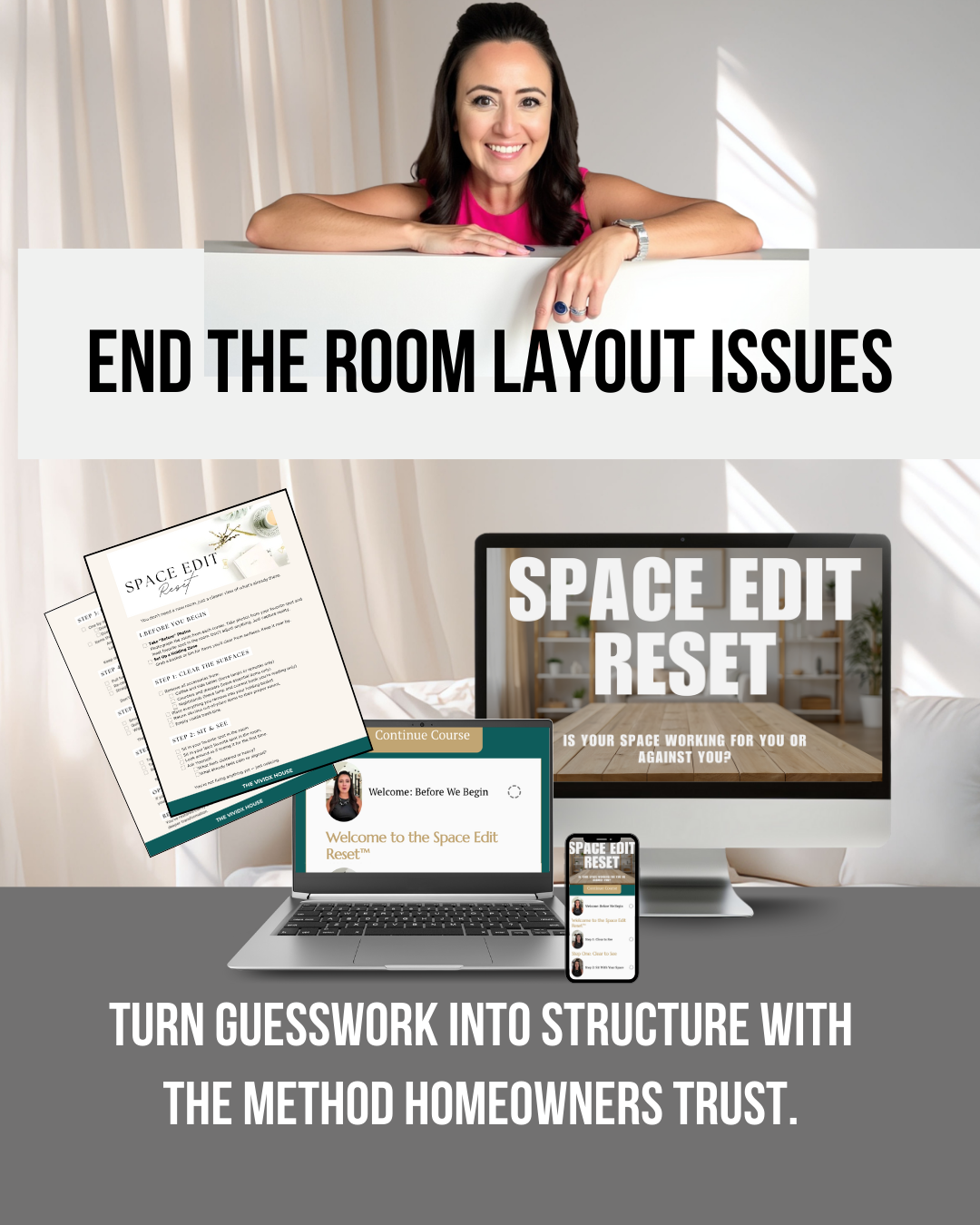
This is exactly why the Space Edit Reset™ works
The Space Edit Reset™ gives you the framework to evaluate the entire home as one system instead of a collection of separate rooms.
Inside the Reset, you learn how to:
• observe each room through the same lens
• clear the visual noise so the architecture becomes obvious
• align anchors from room to room
• test the walkway across the entire house
• balance visual weight between spaces
• rebuild the home so every room supports the next
Once the structure is consistent, the whole home feels cohesive, grounded, and stable.
Two simple tests that reveal why the whole house feels off
1. Stand at the end of your hallway and look through all visible rooms
If your eye jumps instead of glides, the alignment is broken.
The anchors are not working together.
2. Walk through the house and count the number of times you adjust your body
If you step sideways, slow down, angle around corners, or shift your path, the house has circulation tension.
Your house feels off because your body feels off inside it.
A real homeowner moment
A homeowner once told me her entire house felt “just slightly wrong,” no matter how much she cleaned or how many times she redecorated. She had fixed her living room, then her bedroom, then the dining room, but the discomfort followed her everywhere.
Once we applied the Reset, the issue became clear.
Her home had no structural consistency.
The anchors fought each other, the walkways shifted room by room, and the sightlines were overloaded in some spaces and empty in others.
We realigned the anchors, opened circulation, and balanced the walls.
Suddenly the house felt calm from the front door to the back bedroom.
She finally felt like it was one home instead of a collection of rooms.
Your next step
If every room in your house feels off, the solution is not more decor. It is alignment. The Space Edit Reset™ teaches you how to create a home where every room works together instead of against each other.
Apply these principles inside The Space Edit Reset™.
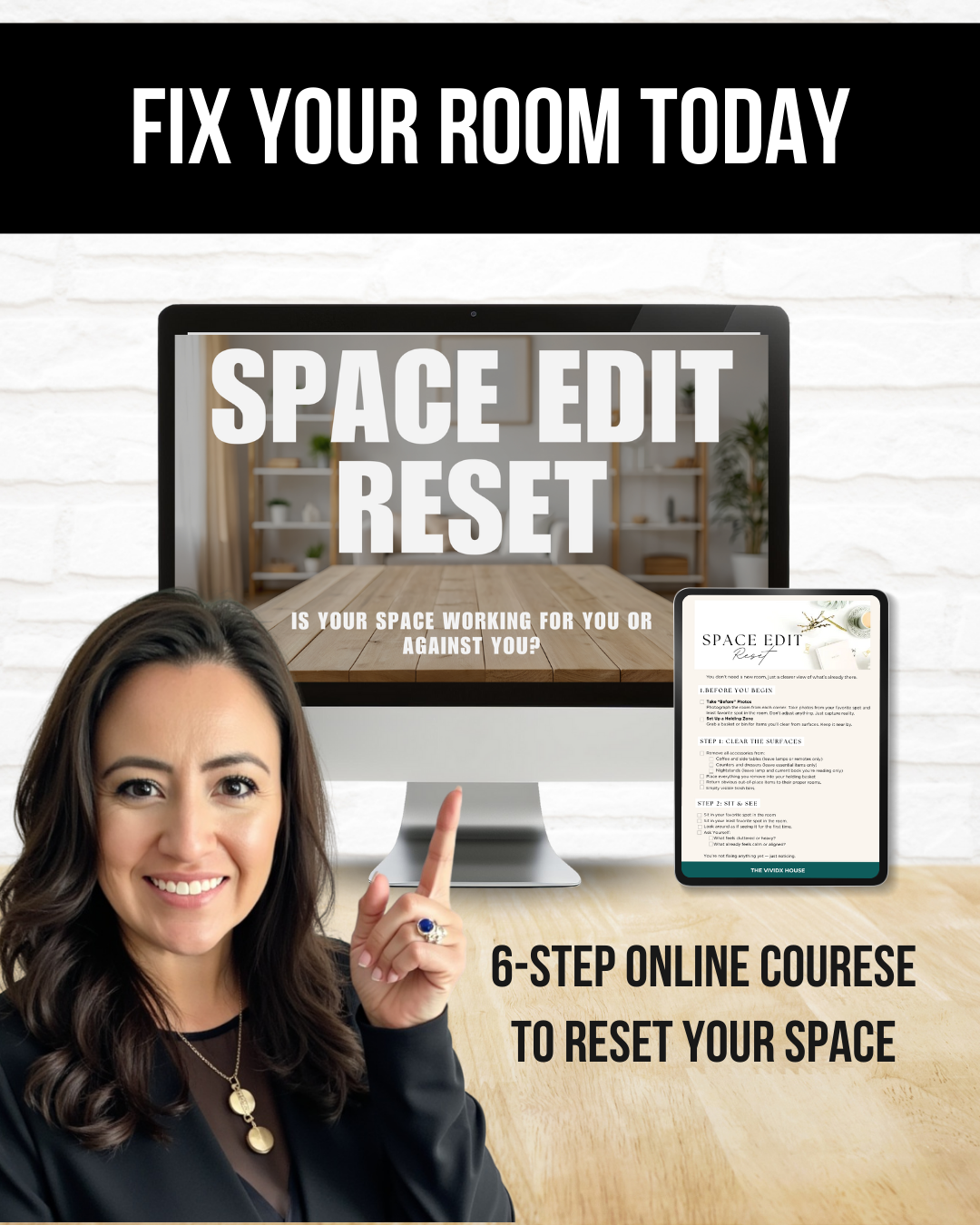
Is your space working for you or against you?
JOIN THE FACEBOOK GROUP: The Space Edit Reset Group
Why Does My Home Feel Chaotic Even When It’s Clean?
You clean the floors, wipe the counters, organize baskets, and put everything away. The house looks tidy for a moment, but something still feels chaotic. The room still carries noise. The space still feels restless. You cannot explain it, but you feel it the moment you walk in.
This is not a cleaning issue.
This is a structural issue.
A home can be spotless and still feel chaotic when the architecture, layout, and sightlines create tension your body registers long before your eyes do.
Chaos is not always clutter. Often it is structure.
Your home feels chaotic when:
• the anchor is wrong
• the walkway is tight
• the scale is mismatched
• the surfaces are visually heavy
• the sightlines are crowded
• the room’s purpose is unclear
Cleaning removes objects.
Structure removes tension.
Here is why your clean home still feels chaotic
1. The anchor placement is creating pressure
If the sofa, bed, or dining table is in the wrong place, the entire room feels unsettled.
Your body senses this before you notice anything visually.
A misplaced anchor makes the home feel chaotic even when every surface is clean.
2. The walkway is forcing tension
If you have to step around furniture, curve unnaturally, or squeeze through a gap, your home will always feel chaotic.
Movement creates emotional order.
When movement is restricted, chaos is the result.
3. The scale of your furniture fights the room
A tiny rug makes the room feel choppy.
An oversized sectional makes the room feel cramped.
A narrow coffee table creates a confusing seating zone.
Scale creates calm when it matches the architecture.
Scale creates chaos when it does not.
4. The surfaces carry too much visual weight
Even clean surfaces can feel chaotic.
This happens when the items on them have too much height, texture, or contrast.
Visual weight matters more than quantity.
5. The sightlines are overloaded
The first thing your eye sees determines whether the home feels peaceful or chaotic.
Overloaded entry sightlines create a ripple effect through the entire home.
Why cleaning does not fix structural chaos
Cleaning solves clutter.
Structure solves confusion.
You can have clear counters, folded blankets, and organized baskets, but if the foundation is off, your home will still feel chaotic.
This is why so many homeowners clean constantly but never feel peace in their homes.
This is exactly why the Space Edit Reset™ works
The Space Edit Reset™ helps you see why the home feels chaotic beneath the clean surfaces. It reveals the root cause of the noise so you finally understand what your home has been trying to tell you.
Inside the Reset, you learn how to:
• observe the home from new vantage points
• clear surfaces so structure becomes visible
• identify the correct anchor
• balance visual weight
• test the walkway for friction
• rebuild the room so the chaos dissolves
Once the foundation is aligned, the home feels calm even before you clean.
Two simple tests to reveal the source of chaos
1. Pull the anchor piece forward by two inches
Move the sofa, bed, or dining table slightly forward.
If the room immediately feels lighter, the chaos was structural, not clutter related.
2. Clear the main sightline completely
Stand at the entrance of the room.
Remove everything in your direct line of vision.
If the room suddenly feels calmer, the chaos was visual, not physical.
A real homeowner moment
A homeowner once told me she cleaned constantly because her home always felt chaotic. But the moment she stopped cleaning, the chaos returned instantly.
Once we applied the Reset, the issue was clear.
Her anchor was pinned to the wrong wall.
The walkway was angled.
Her surfaces were visually heavy.
The home was clean.
The structure was chaotic.
We corrected the anchor, opened the path, and lightened the sightline.
She said, “This is the first time my home has ever felt calm.”
Your next step
If your home feels chaotic even when it is clean, the issue is not clutter. It is structure. The Space Edit Reset™ teaches you how to build a foundation where your home finally feels steady, clear, and grounded.
Apply these principles inside The Space Edit Reset™.
Is your space working for you or against you?
JOIN THE FACEBOOK GROUP: The Space Edit Reset Group
How to Make My House Look Put Together
You walk into certain homes and everything feels complete. Nothing is chaotic. Nothing feels out of place. The home looks polished in a way that feels effortless. Then you look at your own space and wonder why you cannot get that same “put together” feeling no matter how hard you try.
You buy decor. You choose colors you like. You keep things clean. But the house still feels disconnected. It looks almost right, but not fully cohesive. This is not because you lack style. It is because the structure of your home is not anchored yet.
A house looks put together when the structure is aligned, not when the decor is perfect.
Looking put together starts with structure, not styling
Most homeowners assume a put together home comes from:
• matching colors
• having the right decor
• buying coordinated pieces
• creating Pinterest-worthy styling
But none of these matter without structure.
Structure is what makes everything look intentional, calm, and complete.
Here is what makes a home look put together
A put together home is built on five structural truths:
1. The anchor of each room is correct
If the anchor is wrong, the room always looks scattered.
A sofa pointed at the wrong wall, a bed centered incorrectly, or a dining table placed out of alignment makes the entire space feel unfinished.
When the anchor is right, the room immediately looks more polished.
2. The walkway is clean and natural
Visual clutter is not always physical clutter.
Sometimes the pathway through a room creates tension that makes the entire house feel disorganized.
If you have to squeeze, step sideways, or curve unnaturally, the home will never look put together.
3. The scale is proportional
This is one of the biggest reasons a home looks chaotic even when everything is clean.
Examples:
• rug too small
• art hung too high
• lamps oversized or undersized
• coffee table too narrow
• nightstands too tall
When proportions are off, the room looks visually busy.
4. The visual weight is balanced
A home looks scattered when one wall carries too much weight.
Heavy furniture on one side and empty corners on the other create imbalance.
A put together home distributes weight in a way that feels stable.
5. The purpose of each room is clear
A room that is trying to be too many things always looks unfinished.
When the purpose is clear, the space looks intentional and complete.
Why your home does not look put together yet
Because most people skip the structural steps and jump straight to decorating.
They buy bins.
They style shelves.
They replace pillows.
They add more decor.
These things improve appearance, but they do not create cohesion.
Cohesion comes from the underlying framework of the room.
This is exactly what the Space Edit Reset™ teaches you
The Space Edit Reset™ gives you the structural clarity your home has been missing.
It shows you how to:
• observe the room without noise
• clear the surfaces so alignment becomes visible
• position the anchor correctly
• balance visual weight
• rebuild the layout with intention
Once the structure is corrected, the home looks put together even before you add decor.
Two moves that instantly make a home look more complete
1. Clear one major sightline
Stand at the entry of the room and remove everything in your direct line of vision.
This exposes the real architecture and makes the home look more polished instantly.
2. Pull every anchor piece forward two inches
Sofas, beds, tables, dressers.
Bringing the anchor forward removes the “everything against the walls” look, which is one of the fastest ways to make a home look put together.
A real homeowner moment
A homeowner once told me she could not get her home to look polished no matter what she bought. She tried matching decor, perfectly styled shelves, coordinated colors. Nothing worked.
When we walked through the Reset, the issue was clear.
Her anchors were misaligned in every room.
Her sofa was centered to the TV instead of the architecture.
Her bed was centered visually but not proportionally.
Her dining table was placed where it fit, not where it belonged.
Once we corrected the anchors and clarified the path through each room, the entire home looked complete without adding a single new decor item.
She said, “I didn’t need more things. I needed a plan.”
Your next step
If your home never looks put together, the issue is not your decor. It is the structure. The Space Edit Reset™ teaches you how to build the foundation that makes your home look polished, cohesive, and complete.
Apply these principles inside The Space Edit Reset™.
Is your space working for you or against you?
JOIN THE FACEBOOK GROUP: The Space Edit Reset Group