
Why Does Every Room Feel Like It’s Fighting Me?
You walk through your home and nothing feels easy. The living room feels tense. The bedroom feels unsettled. The hallway feels awkward. The dining room feels tight. It is as if every room works against you instead of supporting you. You can feel the resistance in your body. You try to rearrange small things, but the tension stays.
A home feels like it is “fighting you” when the structure is in conflict.
This is not about clutter.
This is not about decor.
This is about how the anchor, walkway, scale, and sightlines push against the way you naturally move and rest.
A room fights you when the structure blocks the way your body wants to move
Your home feels oppositional when:
• the anchor is in the wrong place
• the walkway forces unnatural movement
• the seating zone is too wide or too tight
• the furniture scale disrupts circulation
• the walls carry uneven visual weight
• the sightlines create pressure
• the purpose of the room does not match your life
When any one of these is off, the room resists you.
When multiple are off, the entire home feels confrontational.
Here are the real reasons your rooms feel like they’re pushing back
1. The walkway forces friction
If you have to slow down, angle your body, squeeze past furniture, or take unnecessary steps, the room is physically resisting you.
Flow is the foundation of comfort.
When flow breaks, resistance appears.
2. The anchor pulls the room in the wrong direction
A sofa pointed at the wrong wall, a bed centered incorrectly, or a dining table placed off balance creates immediate tension.
Your body can sense that the anchor does not match the architecture.
3. The seating zone does not fit the room
When the sofa and chairs sit too far apart or too close together, the room feels uncomfortable.
Distance creates disconnect.
Tight spacing creates pressure.
Either way, your body feels pushed.
4. The furniture scale dominates or disappears
Oversized pieces create a sense of suffocation.
Undersized pieces create instability.
Rooms fight you when the scale contradicts the size of the architecture.
5. The surfaces carry too much height or density
Even when tidy, tall lamps, layered decor, or heavy consoles create a feeling of congestion.
This visual pressure makes the room feel confrontational.
6. The room is not designed for the life you live now
A room built for past routines will always resist your current movement patterns.
Your home is fighting your life because it is built for a previous version of you.
Why styling and decluttering never fix a room that feels oppositional
Most homeowners try:
• new decor
• more storage
• rearranging accessories
• removing items
But none of these address the structural cause.
The resistance comes from how the room is constructed, not how it is decorated.
Rooms stop fighting you when the structure supports your movement
A supportive room has:
• a grounded anchor
• an effortless walkway
• balanced walls
• proportional scale
• clean sightlines
• a clear purpose
When these elements work together, the room feels like it is on your side.
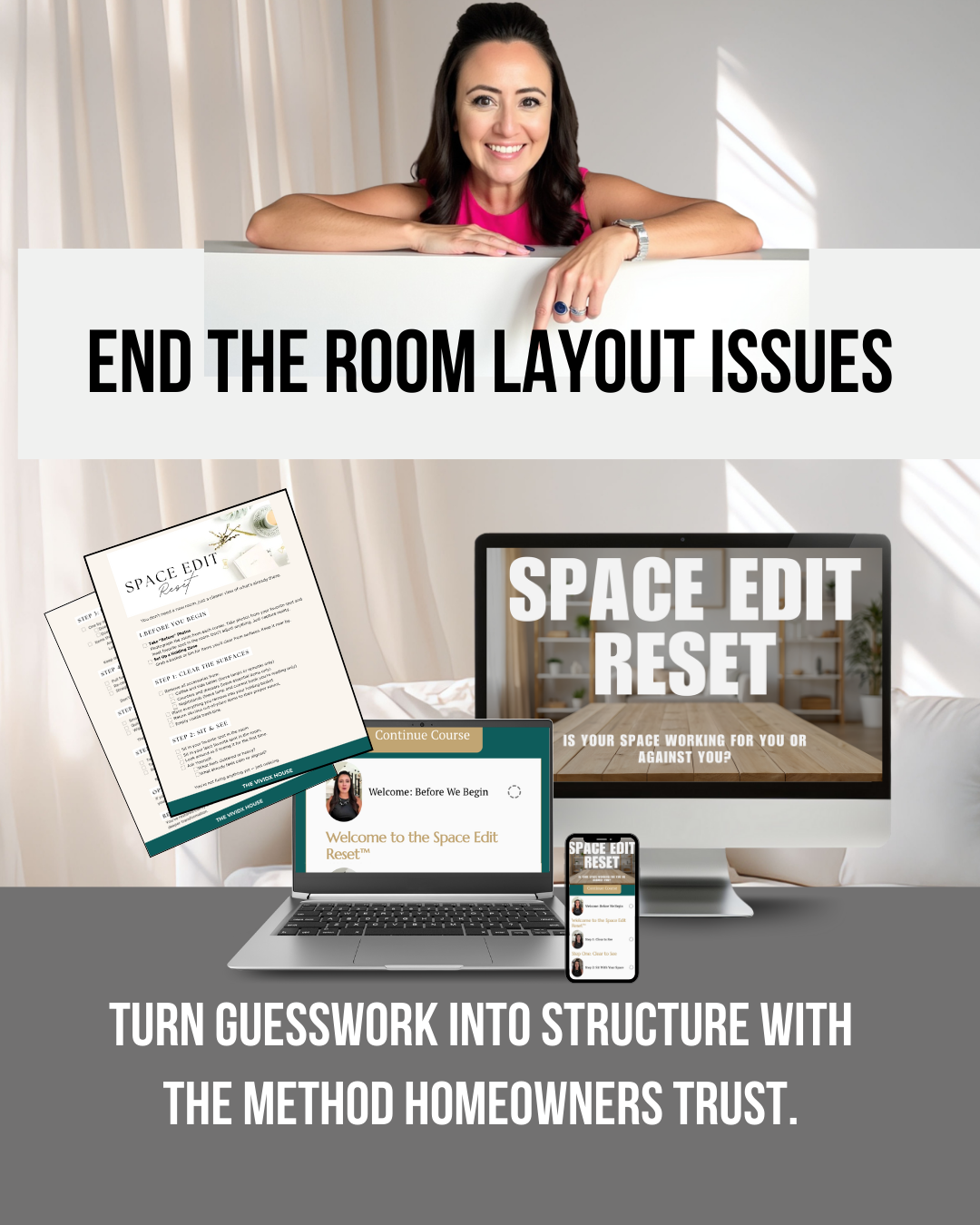
This is exactly why the Space Edit Reset™ works
The Space Edit Reset™ diagnoses the structural friction in your home and shows you how to rebuild each room so it works with you instead of against you.
Inside the Reset, you learn how to:
• observe the room through the lens of ease
• clear surfaces so the architecture is revealed
• find the correct anchor
• open the walkway
• balance visual weight
• reset the room with grounded placement
Once the structure is aligned, the resistance dissolves.
Two simple tests that reveal what the room is fighting against
1. Walk the room with a natural stride
Do not look down.
Notice where your body adjusts.
Every point of hesitation is where the room is resisting you.
2. Pull the anchor forward by two inches
Move the sofa, bed, or table slightly forward.
If the room instantly feels calmer, the walls were creating pressure.
A real homeowner moment
A homeowner once told me, “Every room in my house feels like it’s fighting me.”
She avoided her living room.
She rushed through the hallway.
She never relaxed in the bedroom.
When we applied the Reset, the truth surfaced.
Her anchors were all pointed at the wrong focal points.
Her walkways were tight or angled.
Her surfaces were heavy.
Every room forced friction into her body.
We corrected the anchor, opened the circulation, and simplified the sightlines.
The resistance disappeared.
Her home finally stopped arguing with her.
Your next step
If your rooms feel like they are fighting you, the problem is not your decor. It is the structure. The Space Edit Reset™ teaches you how to realign your home so every room works with you, not against you.
Apply these principles inside The Space Edit Reset™.
Is your space working for you or against you?
JOIN THE FACEBOOK GROUP: The Space Edit Reset Group
Why Does My Home Look Fine but Still Feel Wrong?
You walk through your home and everything looks acceptable. The decor matches. The furniture is in good condition. The color palette is cohesive. Nothing jumps out as a problem. But the moment you step into each room, something feels wrong. You feel unsettled. You feel a quiet tension. The space looks fine but does not feel right.
This disconnect is one of the biggest signs that the structure of your home is misaligned.
A home can look perfect in photos but feel uncomfortable in person when the architecture and layout are working against you.
A home looks right but feels wrong when the structure does not support the experience
Your home is sending you signals.
When everything looks good but feels off, the issue lives beneath the surface.
Homes feel wrong when:
• the anchor is centered visually but not structurally
• the walkway is creating friction
• the furniture scale does not match the room
• the walls carry uneven visual weight
• the sightlines are crowded or interrupted
• the room’s purpose has not been defined
You are not imagining it.
Your body responds to these issues long before your eyes do.
Here are the real reasons your home feels wrong even though it looks right
1. The anchor is aligned to the wrong reference point
You may have centered your sofa to the TV, your bed to the wall, or your dining table to a light fixture.
But the true focal point may be:
• a window
• a fireplace
• the architectural center of the room
• the strongest visual line
When the anchor is visually centered but architecturally wrong, the room looks correct and feels incorrect.
2. The walkway forces micro adjustments
Even tiny adjustments in the way you move create tension.
If you have to shift your step around a table or angle around a chair, your home feels wrong no matter how clean or styled it is.
3. The scale feels slightly off
Scale issues can be subtle but powerful.
Examples:
• a rug just slightly too small
• a coffee table that sits too far away
• side tables that feel undersized
• art that floats too high
A room with mismatched scale looks fine in photos but feels wrong in person.
4. The visual weight is unbalanced
When one wall carries too much weight and another wall carries almost none, the home feels unstable.
Your eyes bounce around trying to make sense of the imbalance.
Even if the decor is beautiful, the room feels wrong.
5. The room’s purpose does not match your current life
A room may look good and still feel wrong because it is designed for a past version of your habits.
Purpose determines how a space should support you.
When the room does not match the way you live today, it feels disconnected.
Why “fixing the decor” never fixes the feeling
Most homeowners respond to this discomfort by:
• adding new art
• changing pillows
• buying fresh decor
• swapping styles
• adding plants
• rearranging small items
But none of these solve the structural problem beneath the surface.
Decor adjusts appearance.
Structure adjusts experience.
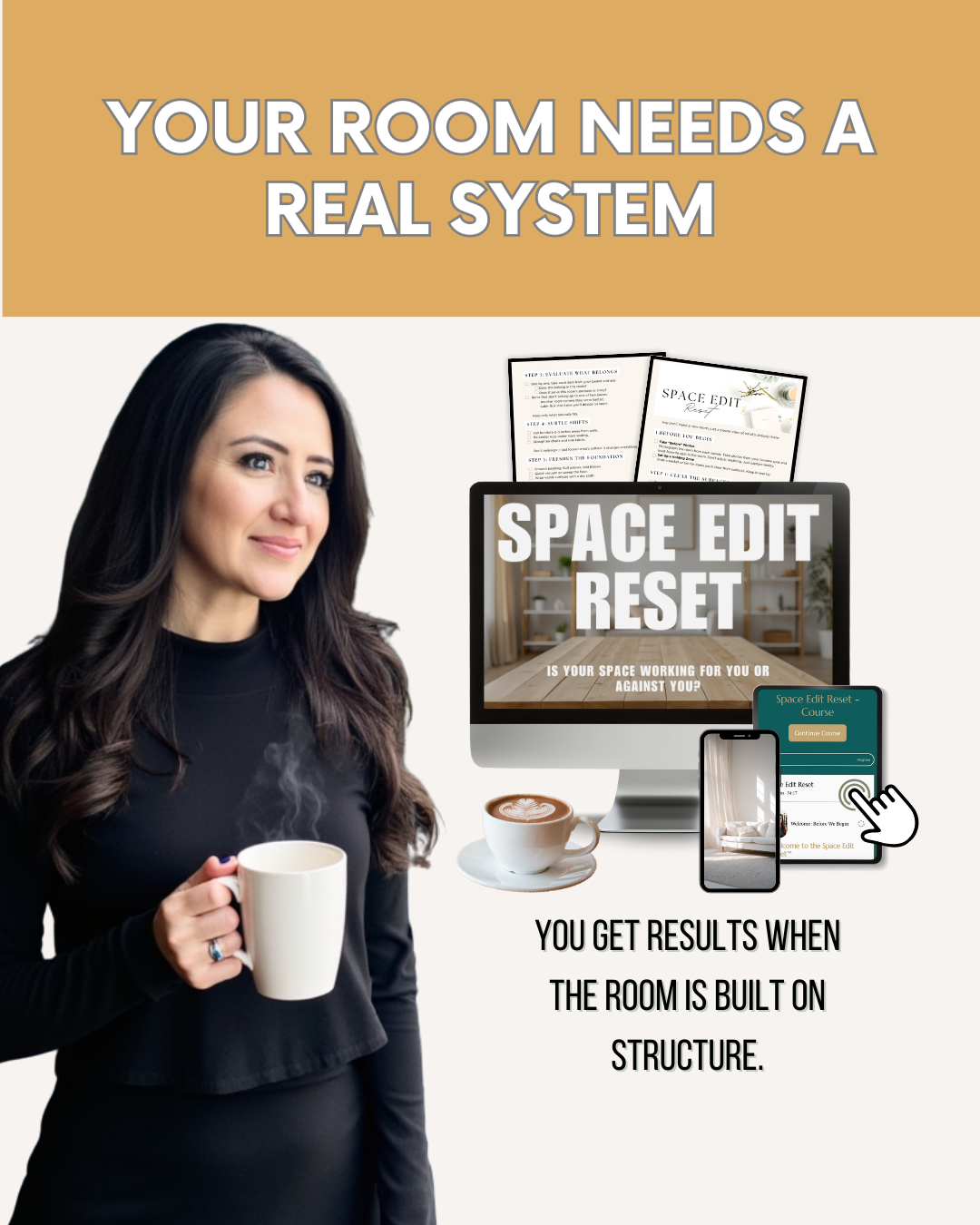
This is exactly why the Space Edit Reset™ works
The Space Edit Reset™ reveals the structural truth behind why your home feels wrong.
It helps you see what your body already senses.
Inside the Reset, you learn how to:
• observe the room with clarity
• clear surfaces so the architecture becomes visible
• identify the correct anchor
• balance the walls
• adjust the walkway for ease
• reset the entire room with purpose
Once the structure is correct, the room finally feels right.
Two simple tests to reveal why your home feels wrong
1. Stand at the doorway and study where your eyes land first
If your eye hits something heavy, crowded, or out of alignment, that is the source of the discomfort.
2. Pull the anchor piece forward two inches
Sofas, beds, tables.
Move the anchor forward slightly.
If the room feels instantly lighter, the walls were creating pressure that decor could never fix.
A real homeowner moment
A homeowner once told me her living room “looked perfect but felt wrong.” She could not explain it. Everything matched. Everything was styled. Everything looked good in photos.
But when we applied the Reset, the issue became clear.
Her sofa was centered visually but not centered to the room’s architecture.
The walkway forced a slight angle.
The walls were unevenly weighted.
We corrected the anchor and opened circulation.
She walked in and said, “It finally feels like my home.”
Your next step
If your home looks fine but still feels wrong, the solution is not new decor. It is alignment. The Space Edit Reset™ teaches you how to rebuild the structure beneath your rooms so they finally feel grounded, supportive, and complete.
Apply these principles inside The Space Edit Reset™.
Is your space working for you or against you?
JOIN THE FACEBOOK GROUP: The Space Edit Reset Group