
How to Arrange a Room
Most people think arranging a room means placing furniture wherever it fits, adding decor until the surfaces look full, and hoping the layout eventually feels right. But if you have tried to arrange a room and something still feels off, you already know this approach does not work.
Arranging a room is not about placing pieces in open spots. It is about creating a structure that supports how you live. When the arrangement is wrong, the entire room feels tense. When the arrangement is right, the room feels grounded the moment you walk in.
Room arrangement is not about style. It is about function.
A room can be beautiful and still feel uncomfortable if the structure is off.
The reason most homeowners struggle to arrange their rooms is simple. They were never taught the sequence designers use.
Designers do not start with decor.
They start with:
• anchor
• circulation
• scale
• purpose
• balance
If these pieces are not in place, the final layout never feels right.
Here is the real sequence for arranging any room
These are the steps professionals use behind the scenes.
They are simple, but most people skip them without realizing it.
1. Identify the anchor
Every room needs one clear anchor.
In a living room, it is the sofa.
In a bedroom, it is the bed.
In a dining room, it is the table.
If the anchor is wrong, the entire arrangement feels wrong.
2. Establish the true focal point
The focal point may not be the one you expect.
Examples:
• a window with a strong view
• a fireplace
• the natural architectural center of the room
If you arrange the room around the wrong focal point, no amount of rearranging will make the layout feel right.
3. Map the circulation path
Before you place anything, decide where your body needs to walk.
This is the most neglected step.
Your walkway should feel natural and spacious, not squeezed or forced.
A layout is uncomfortable when circulation is an afterthought.
4. Choose the correct scale
Scale makes or breaks a room.
Even a well arranged space feels wrong if the pieces are not proportional.
A rug that is too small shrinks the room.
A sofa that is too long crowds the wall.
A coffee table that is too narrow creates tension.
If scale is off, the arrangement never settles.
5. Balance the visual weight
Every room needs balance.
If one wall is heavy and the opposite wall is empty, the arrangement feels lopsided.
Balance has nothing to do with symmetry.
It has everything to do with how the room carries weight.
Why most homeowners struggle with arrangement
Most people skip the first four steps and jump straight to decorating or moving furniture around until something looks better. But arrangement is not trial and error. It is a sequence.
When you do not follow the sequence, you rearrange the same pieces over and over without ever solving the real issue.
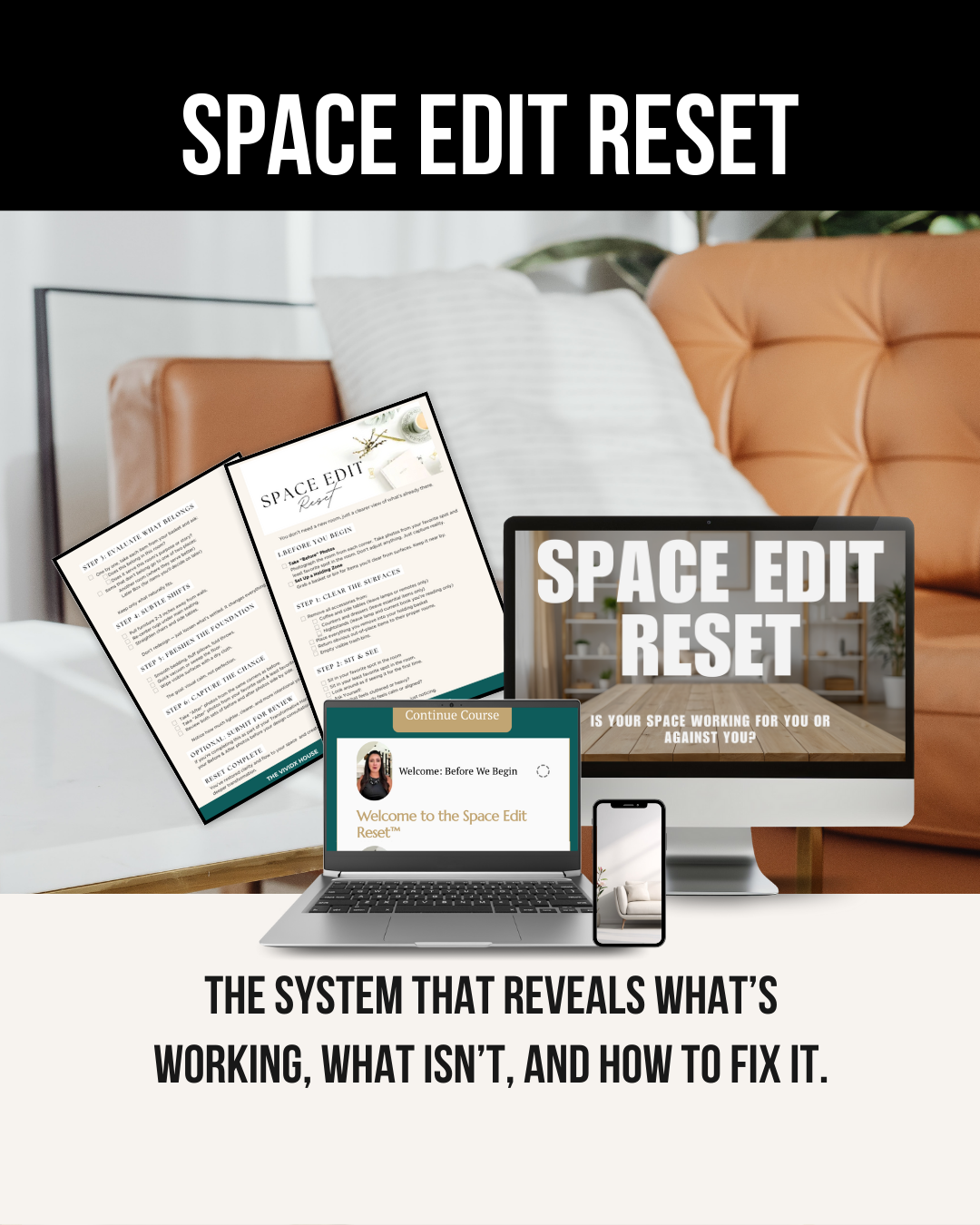
This is exactly what the Space Edit Reset™ teaches
The Space Edit Reset™ does not start with decor.
It starts with structure.
It teaches you how to read your room the way designers do, so arrangement stops being guesswork.
Inside the Reset, you learn how to:
• observe the room with fresh angles
• clear surfaces to expose the structure
• define the room’s purpose
• identify the true anchor
• place each item with intention
• rebuild the layout so it finally feels right
Once you learn the method, arranging a room becomes clear and repeatable.
Two moves that instantly improve any arrangement
1. Pull the anchor piece forward by two inches
Do not rearrange.
Just pull the sofa, bed, or table slightly forward.
This releases pressure from the walls and reveals the real shape of the room.
2. Remove everything from one wall and re enter the space
A blank wall exposes balance issues immediately.
You will see whether the layout feels grounded or crooked.
A real homeowner moment
A homeowner once told me she had arranged her living room five times and nothing felt right. Once we applied the real sequence, the issue became obvious.
Her sofa was aligned to the TV, but the architectural focal point was a large window on another wall. Every arrangement she tried felt wrong because she was anchoring the room to the wrong element.
We rotated the layout toward the true focal point.
She sat on the sofa and said, “This is the first time this room has ever made sense.”
Your next step
If arranging a room feels confusing or frustrating, the problem is not your eye for design. The problem is the missing sequence. A room that works is built on structure, not surface choices.
That is exactly what The Space Edit Reset™ teaches you.
Apply these principles inside The Space Edit Reset™.
Is your space working for you or against you?
JOIN THE FACEBOOK GROUP: The Space Edit Reset Group
Why My Layout Looks Fine but Doesn’t Feel Right
Your furniture is arranged neatly. Nothing is out of place. The rug is centered. The sofa lines up with the wall. Everything looks technically correct. But every time you walk into the room, something feels off. The layout looks fine, but it does not feel right.
This disconnect frustrates homeowners more than anything else. You followed all the typical layout rules, yet the experience of being in the room still feels awkward, tense, or unsettled. When a layout looks correct but feels wrong, the problem is not your eye for design. The problem sits beneath the surface.
When a room feels wrong but looks right, the structure is misaligned
Rooms are not judged only by visuals. They are judged by how your body moves through them. A layout can look ideal in a photo but still create a subtle tension in real life because the architecture, sightlines, or circulation do not support how you live.
If your layout looks right but feels wrong, one of these structural issues is present:
• the anchor is slightly off
• the walkway is interrupted
• the visual weight is uneven
• the scale of the furniture is mismatched
• the purpose of the room is unclear
1. The anchor is centered visually but not structurally
This is the most common issue.
You may have centered the sofa on the wall, but the architecture of the room may be telling a different story.
The real center of the room may be:
• a window
• a fireplace
• the line of the entry
• the structural midpoint of the walls
When the furniture is aligned visually but not architecturally, the room feels off even though it appears correct.
2. The walkway is slightly too tight or angled
Your body notices walkway friction instantly.
If you have to shift, squeeze, or angle your steps to move around a coffee table or chair, the room will never feel right.
A walkway that is off by even one inch changes the experience of the entire layout.
3. The scale looks fine in photos but feels wrong in person
Scale is one of the most misunderstood parts of layout.
A coffee table that fits the rug might still feel too small for the seating zone.
A sofa that matches the wall might still feel oversized when you stand next to it.
The eye sees alignment.
The body senses proportion.
When these do not match, the room feels wrong.
4. The visual weight is unbalanced
A layout can look balanced in a photo but feel heavy in real life.
Examples:
• too much furniture on one side
• a gallery wall that overwhelms one corner
• a console or dresser that pulls the eye away from the anchor
When one area carries more weight than the others, the room feels unstable.
5. The layout reflects habits, not purpose
Many layouts feel wrong because they were built based on habit instead of intention.
The sofa goes where it has always been.
The chair stays in the corner because it fills the gap.
The TV sits where the cable outlet originally was.
When the layout does not reflect the room’s real purpose, it looks fine but feels disconnected.
Why the discomfort never goes away
Because most homeowners try to fix the feeling with decor changes instead of structural changes.
They switch pillows.
They buy new lamps.
They restyle the shelves.
But decor cannot correct:
• anchor misalignment
• circulation friction
• scale mismatch
• visual imbalance
You cannot style your way out of a structural issue.
This is exactly why the Space Edit Reset™ works
The Space Edit Reset™ teaches you how to see the structural truth of your room.
It strips away the surface layer so you can understand:
• what the room is actually doing
• where the anchor truly belongs
• how your body wants to move
• which elements carry too much weight
• how to rebuild the room so it feels grounded
Once you apply the Reset, the difference is immediate.
The layout not only looks right. It feels right.
Two diagnostic moves that reveal the real issue
1. Sit in the seat you never choose
The seat you avoid holds the truth.
From that angle, you will see whether the anchor is off, the walkway is tight, or the weight is unbalanced.
2. Pull the anchor piece forward two inches
Move the sofa, bed, or table slightly forward.
If the room instantly feels lighter, the layout was pinned too tightly to the wall, disrupting the structure.
A real homeowner moment
A homeowner once told me her living room “looked perfect but felt off” for three years. Everything was centered. The rug was aligned. The sofa matched the wall.
Once we applied the Reset, the issue became clear.
Her sofa was centered visually but not centered to the architecture.
The window behind it was slightly off center, which shifted the balance of the entire room.
We moved the sofa a few inches to the true anchor point.
She walked back in and said, “This is the first time this room has made sense.”
Your next step
If your layout looks fine but does not feel right, the solution is not more decor. It is a reset. The Space Edit Reset™ teaches you how to identify the structural issue so your room finally feels grounded, balanced, and complete.
Apply these principles inside The Space Edit Reset™.
Is your space working for you or against you?
JOIN THE FACEBOOK GROUP: The Space Edit Reset Group