
Why Does My Home Feel Uncomfortable?
You walk through your home and feel a subtle discomfort you cannot explain. Nothing is wrong. Nothing is messy. The decor is fine. The furniture is fine. The room looks acceptable. Yet something about the space makes you restless. You cannot sink into the sofa. You cannot relax in your bedroom. You cannot settle anywhere for long.
A home feels uncomfortable when the structure works against you.
This has nothing to do with style and everything to do with how the room is arranged beneath the surface.
Comfort comes from structure, not decor
Your home feels uncomfortable when:
• the anchor is misaligned
• the walkway creates tension
• the furniture scale does not match the room
• the surfaces carry too much weight
• the sightlines are crowded
• the purpose of the room is unclear
These issues make a home feel uneasy even when everything is clean and visually appealing.
Here are the real reasons your home feels uncomfortable
1. The anchor is not supporting the room
Your sofa, bed, or dining table sets the tone for the entire space.
If the anchor is pointed at the wrong focal point or pushed too tightly against the wall, the room feels tense.
A misaligned anchor creates emotional discomfort.
2. The walkway interrupts your natural movement
If you have to shift, angle, or squeeze as you walk through a room, the space feels uncomfortable no matter how beautiful it is.
Your body senses friction immediately.
3. The furniture scale feels imposing or insufficient
Oversized pieces make the room feel cramped.
Undersized pieces make the room feel unstable.
When the scale does not match the architecture, comfort disappears.
4. The surfaces hold more weight than the eye can process
Even clean surfaces can feel overwhelming if they carry tall objects, layers, stacks, or clusters.
This creates visual tension that your body interprets as discomfort.
5. The sightlines clash with each other
When your eyes hit multiple competing elements, you feel unsettled.
A crowded entry wall, a heavy console, or a tall piece out of proportion can disrupt the entire room.
6. The room is not serving the life you live now
A space designed for a past version of your routines will always feel uncomfortable.
Your home needs to reflect how you live today.
Why styling cannot fix an uncomfortable room
Most homeowners try to solve discomfort by:
• buying new decor
• adding throw pillows
• rearranging accessories
• swapping small pieces
These choices do not relieve structural pressure.
They only mask it temporarily.
Comfort returns only when the structure is corrected
You feel comfortable in a space when:
• the anchor is aligned
• the walkway feels effortless
• the scale matches the room
• the sightlines feel calm
• the surfaces feel balanced
• the purpose is clear
Comfort is a structural experience, not a decorative one.
This is exactly why the Space Edit Reset™ works
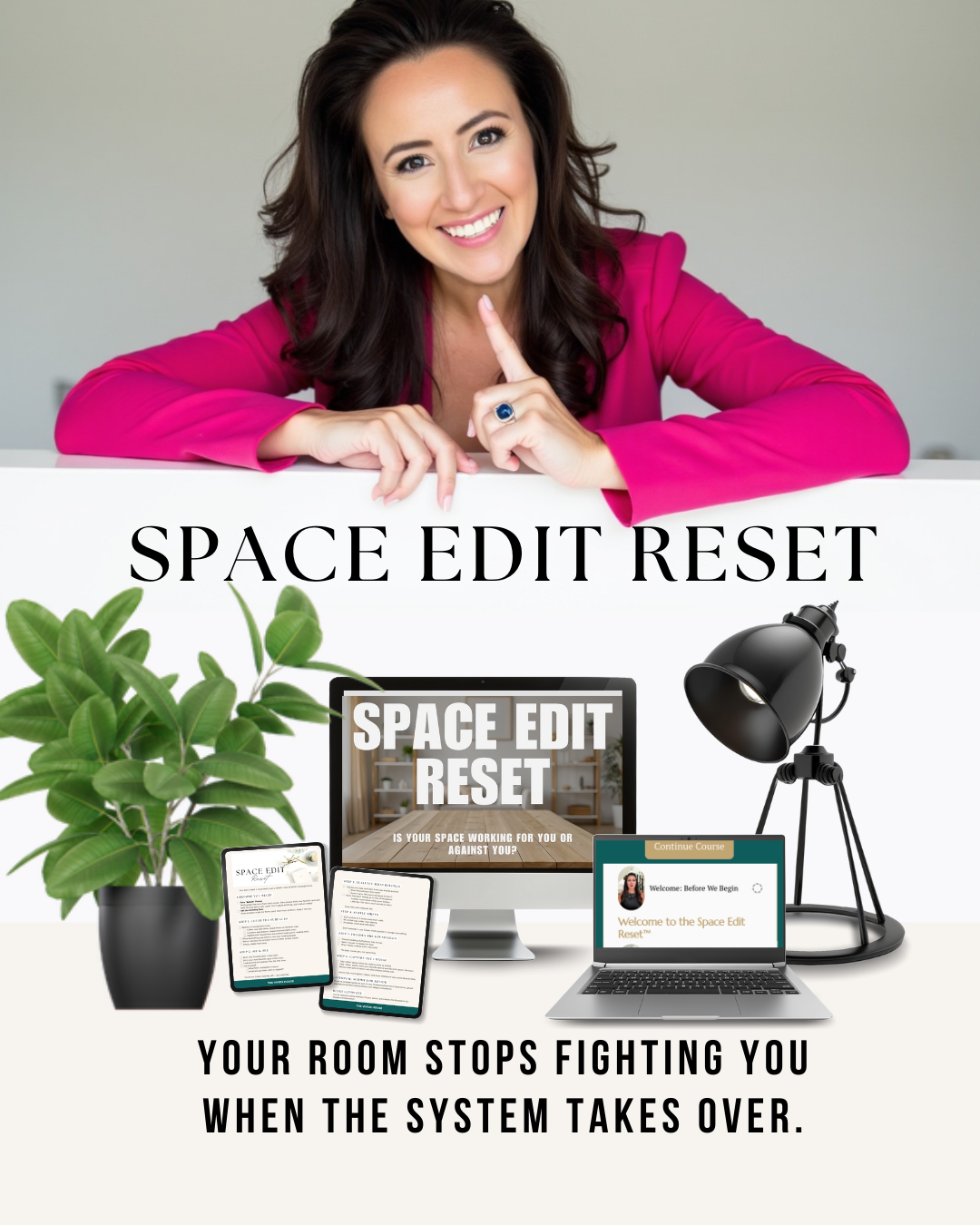
The Space Edit Reset™ reveals why your home feels uncomfortable and shows you how to correct the architecture beneath the room.
Inside the Reset, you learn how to:
• observe the home from multiple vantage points
• clear surfaces so the structure becomes visible
• identify the correct anchor
• open circulation paths
• balance visual weight
• rebuild the room so it supports your body instead of working against it
Comfort becomes the natural result of structural clarity.
Two simple tests to find the source of discomfort
1. Sit in the seat you avoid
This spot always exposes the real problem.
From here you will see tight walkways, uneven weight, or anchor misalignment instantly.
2. Clear your entry sightline
Remove everything visible when you first step into the room.
If the room feels calmer right away, the discomfort was visual overload, not clutter.
A real homeowner moment
A homeowner once told me her home felt uncomfortable in a way she could not describe. She cleaned constantly. She changed decor. She rearranged furniture. Nothing helped.
Once we applied the Reset, the reason was obvious.
Her anchor was aligned to the wrong wall in every room.
The walkways forced awkward angles.
The surfaces carried more visual weight than the architecture could handle.
We corrected the anchor, opened the paths, and lightened the sightlines.
Her home felt comfortable for the first time.
She didn’t realize comfort was structural.
Your next step
If your home feels uncomfortable, the issue is not the decor. It is the structure. The Space Edit Reset™ teaches you how to realign your rooms so your home finally feels grounded, calm, and supportive.
Apply these principles inside The Space Edit Reset™.
Is your space working for you or against you?
JOIN THE FACEBOOK GROUP: The Space Edit Reset Group
How to Make My House Look Put Together
You walk into certain homes and everything feels complete. Nothing is chaotic. Nothing feels out of place. The home looks polished in a way that feels effortless. Then you look at your own space and wonder why you cannot get that same “put together” feeling no matter how hard you try.
You buy decor. You choose colors you like. You keep things clean. But the house still feels disconnected. It looks almost right, but not fully cohesive. This is not because you lack style. It is because the structure of your home is not anchored yet.
A house looks put together when the structure is aligned, not when the decor is perfect.
Looking put together starts with structure, not styling
Most homeowners assume a put together home comes from:
• matching colors
• having the right decor
• buying coordinated pieces
• creating Pinterest-worthy styling
But none of these matter without structure.
Structure is what makes everything look intentional, calm, and complete.
Here is what makes a home look put together
A put together home is built on five structural truths:
1. The anchor of each room is correct
If the anchor is wrong, the room always looks scattered.
A sofa pointed at the wrong wall, a bed centered incorrectly, or a dining table placed out of alignment makes the entire space feel unfinished.
When the anchor is right, the room immediately looks more polished.
2. The walkway is clean and natural
Visual clutter is not always physical clutter.
Sometimes the pathway through a room creates tension that makes the entire house feel disorganized.
If you have to squeeze, step sideways, or curve unnaturally, the home will never look put together.
3. The scale is proportional
This is one of the biggest reasons a home looks chaotic even when everything is clean.
Examples:
• rug too small
• art hung too high
• lamps oversized or undersized
• coffee table too narrow
• nightstands too tall
When proportions are off, the room looks visually busy.
4. The visual weight is balanced
A home looks scattered when one wall carries too much weight.
Heavy furniture on one side and empty corners on the other create imbalance.
A put together home distributes weight in a way that feels stable.
5. The purpose of each room is clear
A room that is trying to be too many things always looks unfinished.
When the purpose is clear, the space looks intentional and complete.
Why your home does not look put together yet
Because most people skip the structural steps and jump straight to decorating.
They buy bins.
They style shelves.
They replace pillows.
They add more decor.
These things improve appearance, but they do not create cohesion.
Cohesion comes from the underlying framework of the room.
This is exactly what the Space Edit Reset™ teaches you
The Space Edit Reset™ gives you the structural clarity your home has been missing.
It shows you how to:
• observe the room without noise
• clear the surfaces so alignment becomes visible
• position the anchor correctly
• balance visual weight
• rebuild the layout with intention
Once the structure is corrected, the home looks put together even before you add decor.
Two moves that instantly make a home look more complete
1. Clear one major sightline
Stand at the entry of the room and remove everything in your direct line of vision.
This exposes the real architecture and makes the home look more polished instantly.
2. Pull every anchor piece forward two inches
Sofas, beds, tables, dressers.
Bringing the anchor forward removes the “everything against the walls” look, which is one of the fastest ways to make a home look put together.
A real homeowner moment
A homeowner once told me she could not get her home to look polished no matter what she bought. She tried matching decor, perfectly styled shelves, coordinated colors. Nothing worked.
When we walked through the Reset, the issue was clear.
Her anchors were misaligned in every room.
Her sofa was centered to the TV instead of the architecture.
Her bed was centered visually but not proportionally.
Her dining table was placed where it fit, not where it belonged.
Once we corrected the anchors and clarified the path through each room, the entire home looked complete without adding a single new decor item.
She said, “I didn’t need more things. I needed a plan.”
Your next step
If your home never looks put together, the issue is not your decor. It is the structure. The Space Edit Reset™ teaches you how to build the foundation that makes your home look polished, cohesive, and complete.
Apply these principles inside The Space Edit Reset™.
Is your space working for you or against you?
JOIN THE FACEBOOK GROUP: The Space Edit Reset Group