How to Fix a Room Without Buying Anything New
Most people reach a point where they stand in the middle of a room and think, I need to buy something to fix this. A new lamp, a new rug, a new piece of art. But then the boxes arrive, and nothing actually changes. The room still feels off. The frustration stays.
The real problem isn’t a lack of decor. It’s a lack of structure.
A room stops working long before the budget does. What you’re feeling is misalignment between function, placement, and visual weight. And no amount of shopping replaces the step that’s missing.
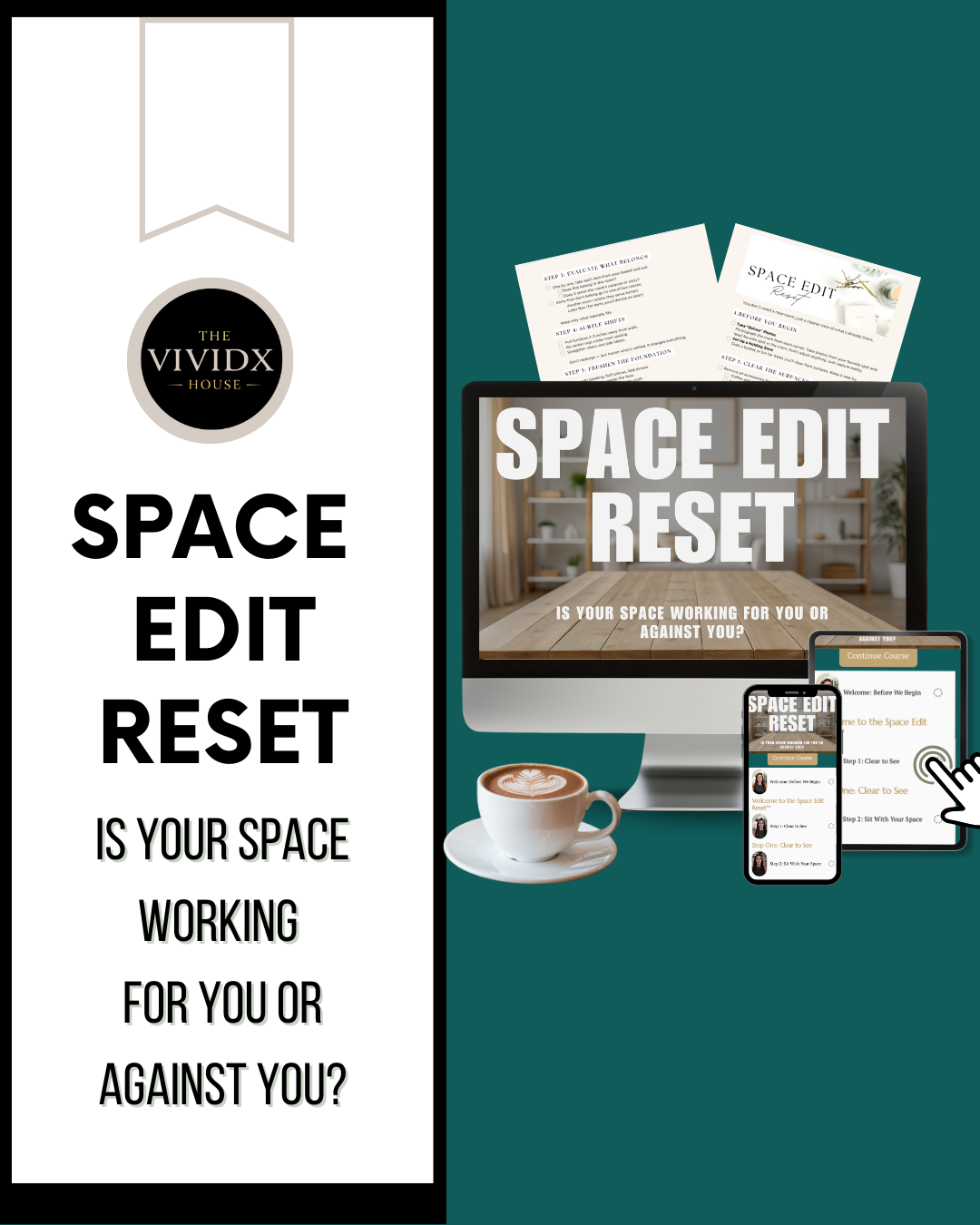
This is exactly why The Space Edit Reset™ exists.
What’s Actually Happening in a Room That Isn’t Working
When a space feels wrong, it usually comes down to three invisible issues:
1. Visual overload
Too many small objects compete for attention. Even clean surfaces can feel busy depending on the distribution and scale of what’s there.
2. Layout friction
Furniture can technically fit but still interrupt how you move, sit, reach, or see across the room. When the anchor pieces are locked in place for years, you stop noticing how much resistance they create.
3. Identity mismatch
Rooms often hold objects from older chapters of your life. That mismatch changes how the space feels even if nothing looks messy.
You don’t fix these issues by adding more things. You fix them by seeing the room clearly again.
The Step Most People Skip
Most homeowners jump straight into decorating. They style shelves, add baskets, hang art, and hope it solves the feeling. But styling is Step Six of a design process, not Step One.
What’s missing is a reset.
The Space Edit Reset™ teaches you how to correct the room at the foundation level before a single dollar is spent. It’s the difference between rearranging and transforming.
Here’s How to Fix a Room Today Without Buying a Single Thing
These moves create immediate change because they reveal the truth of the room instead of masking it.
1. Clear One Surface Completely
Pick the surface that catches the most items:
the coffee table, the nightstand, the kitchen counter by the fridge.
Remove everything and step back.
You’ll be surprised at how quickly your eyes relax.
This is the “Observe” and “Strip” stage of the Space Edit Reset™. It lets you see what the room has actually been holding.
2. Sit in Three Different Spots
Move to places you never sit. The corner. The opposite end of the sofa. The chair that’s mostly decorative.
From each angle, notice:
What feels heavy?
What feels crowded?
What suddenly looks right?
This is how you diagnose what’s working and what’s not. It’s not emotional guessing. It’s spatial reading.
3. Pull the Anchor Piece Forward
Whether it’s the sofa, the bed, or the dining table, pull it away from the wall by two or three inches.
This small shift softens the entire room and immediately removes the “boxed in” feeling that stops a space from feeling comfortable.
4. Reintroduce Only What Belongs
Go back to the items you cleared from the surface.
Ask one question:
Does this belong in this room?
If the answer is yes, it returns.
If the answer is no, place it in a shuttle bin at the doorway.
If you’re unsure, it becomes a Later Box item.
This is the heart of the Space Edit Reset™. Nothing random. Nothing placed out of habit.
5. Look at the Room as If You Were Seeing It for the First Time
Walk through your front door, pause at the threshold of the room, and let your eyes land where they naturally go.
If the first thing you see feels crowded or visually loud, that area is your next micro-reset zone.
You haven’t bought anything new, yet the room is already functioning differently.
A Real-Life Example
A client once asked me why her living room felt wrong even though everything in it was beautiful. The sofa was high-quality. The coffee table was solid wood. The decor was tasteful. But she avoided the room every evening.
We started with a reset instead of a shopping list.
We cleared the surfaces. We sat in multiple spots. We pulled the sofa forward. We relocated several items that belonged in the office, not the living room. Nothing new was purchased.
When she walked back in, she stopped in the doorway.
The room finally matched the life she was living now, not the life she lived five years ago when she bought the furniture.
That shift had nothing to do with buying anything. It came from seeing the room clearly for the first time.
Why This Works
Because the problem was never about decor.
It was about structure and support.
The Space Edit Reset™ corrects what’s underneath the styling decisions. It shows you how to make a room work before you ever decorate it.
If you want to go deeper and see these steps demonstrated in real homes, start with The Space Edit Reset™. And when you’re ready for full-scale transformation, that’s what the Transformative Home Experience is built for.
Your home can work. You just need a reset, not more shopping.
Apply these principles inside The Space Edit Reset™. Is your space working for you or against you?